
Your groom suit can tell a story before the first dance. Small choices today can look unforgettable tomorrow.
Each style change below shows how a look can shift, feel better, and fit your life, not just a photo.
1. Classic Black Tuxedo With a Softer Daylight Twist
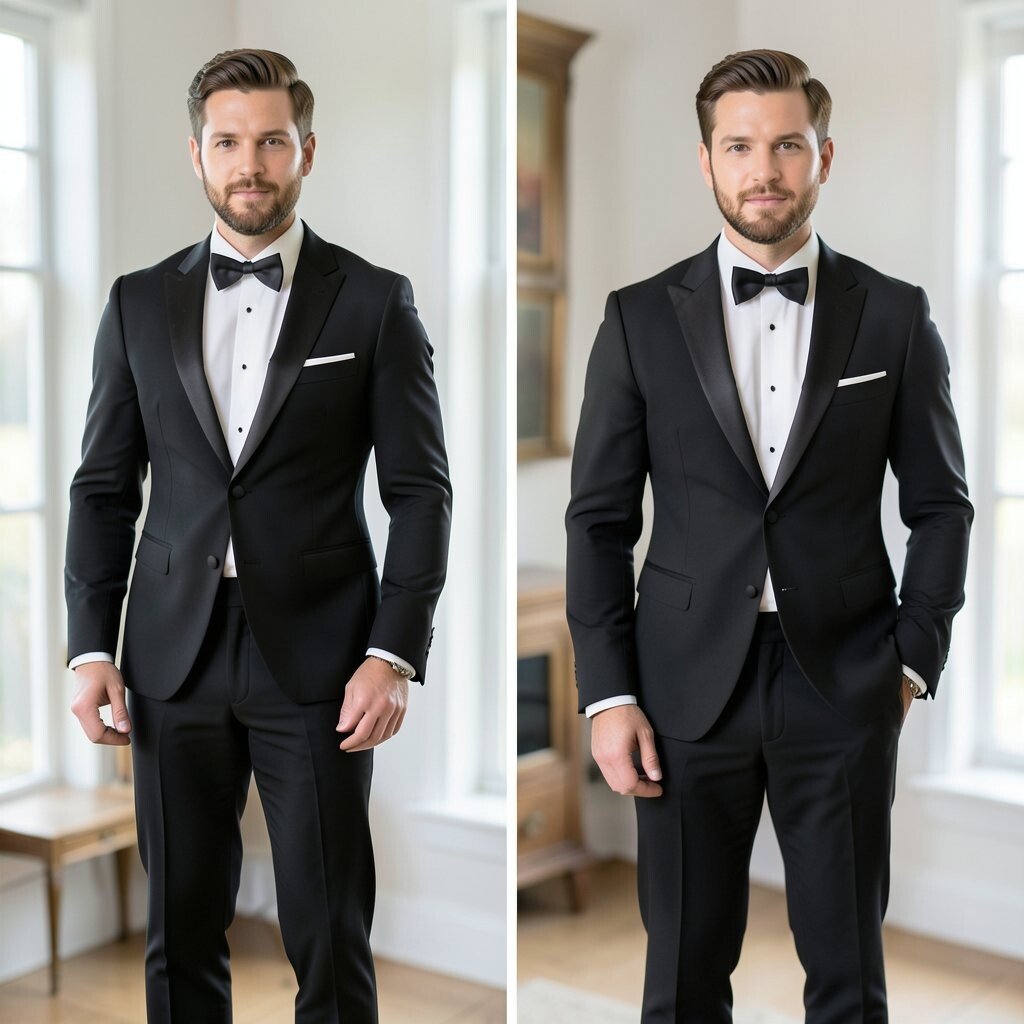
The before look is often a sharp black tuxedo with a stiff collar and heavy shine. After styling, the same suit reads calmer in daylight because the shirt fabric and styling feel lighter.
Try swapping to a crisp white shirt with a less glossy finish and a clean, simple placket. Pair it with a matte black or satin-like belt and shoes so the whole outfit looks expensive without screaming. Keep accessories minimal so your face stays the main focus in every picture.
2. Matching Vest to Bust a Flat Silhouette Into Shape

Before, many grooms skip the vest or choose one that sits too loose. The jacket then drapes in a way that makes the chest look wider and the waist look less defined.
After adding a fitted vest, the suit starts to hug the right places and your torso looks balanced. A vest also helps the jacket buttons look purposeful, not accidental.
If you want an easy upgrade, choose a vest that mirrors your wedding color palette with a subtle tint, like charcoal or deep navy. Consider a vest with a slightly higher button stance to create a tidy line under photos.
3. From Wrinkled Heirloom to Tailored Comfort That Moves
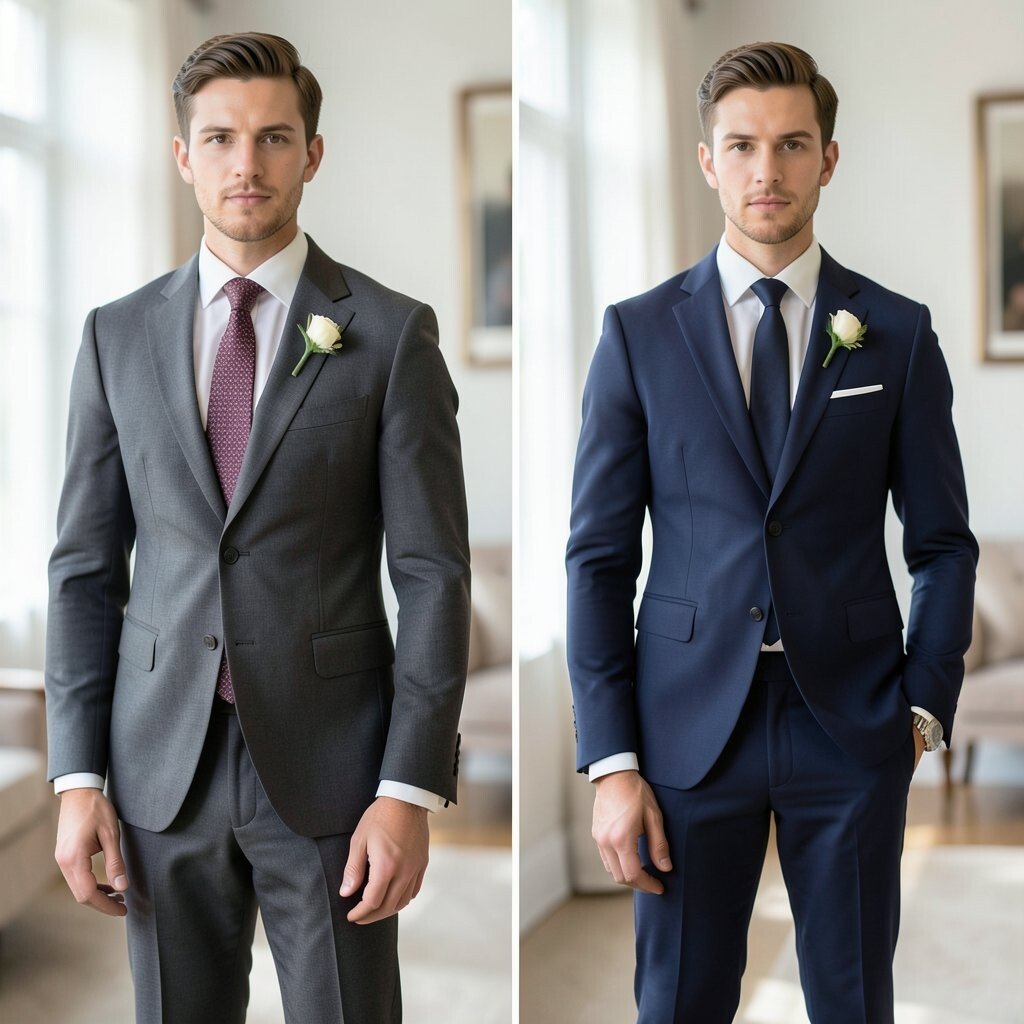
The before version might be a family suit borrowed from a past event. Even if it looks good on a hanger, it can wrinkle at the elbows and feel tight when you reach for a car door.
After a modern pressing and small fit edits, the suit becomes smoother and more breathable. Tailoring at the shoulders, sleeve length, and waist can make a big difference in comfort.
For practical care, steam it the night before and hang it in a bathroom with warm shower steam for a short time. If the wedding is outdoors, ask for slight fabric rotation so movement feels natural during the ceremony.
Remember that comfort shows up in your posture, and good posture is the best “style accessory.” When your jacket sits correctly, you look confident even while holding the ring box.
4. Crisp White Shirt to Textured Off-White for Depth in Photos

In the before stage, a pure white shirt can look too flat under bright lights. It may also reflect camera flash in a way that distracts from your face.
After the switch to off-white or a lightly textured fabric, the whole outfit gains soft depth. Texture catches light in a gentle way, so your suit looks polished from every angle.
5. Wide-Bowed Tie to a Cleaner Knot With a Modern Feel

The before tie might be too wide or tied bulky, which can make your neck area look heavier. Even a great suit can feel off when the tie dominates the top half.
After choosing a slimmer tie and tying it with a neat knot, your face looks longer and your overall look turns sharper. Keep the tie length hitting right around your belt line so the balance feels right.
If you want practical personalization, pick a tie pattern that matches your wedding mood, like tiny dots for a friendly vibe. For a trendier finish, try a knit tie, because it adds a relaxed texture without losing elegance.
6. Traditional Satin Shoes to Weather-Ready Leather With Shine Control

Before, satin shoes look amazing in indoor photos but can scuff fast outside. They also show every water spot, which is stressful on wedding day.
After moving to high-quality leather with controlled shine, your feet stay comfortable and picture-perfect. Leather also handles grass, rain, and cobblestones better when you wear the right insole.
For a practical upgrade, break them in early and use a thin protective spray. Choose a shade close to your belt so the entire look stays connected and tidy.
7. Monochrome Navy Suit to a Slightly Warmer Undertone
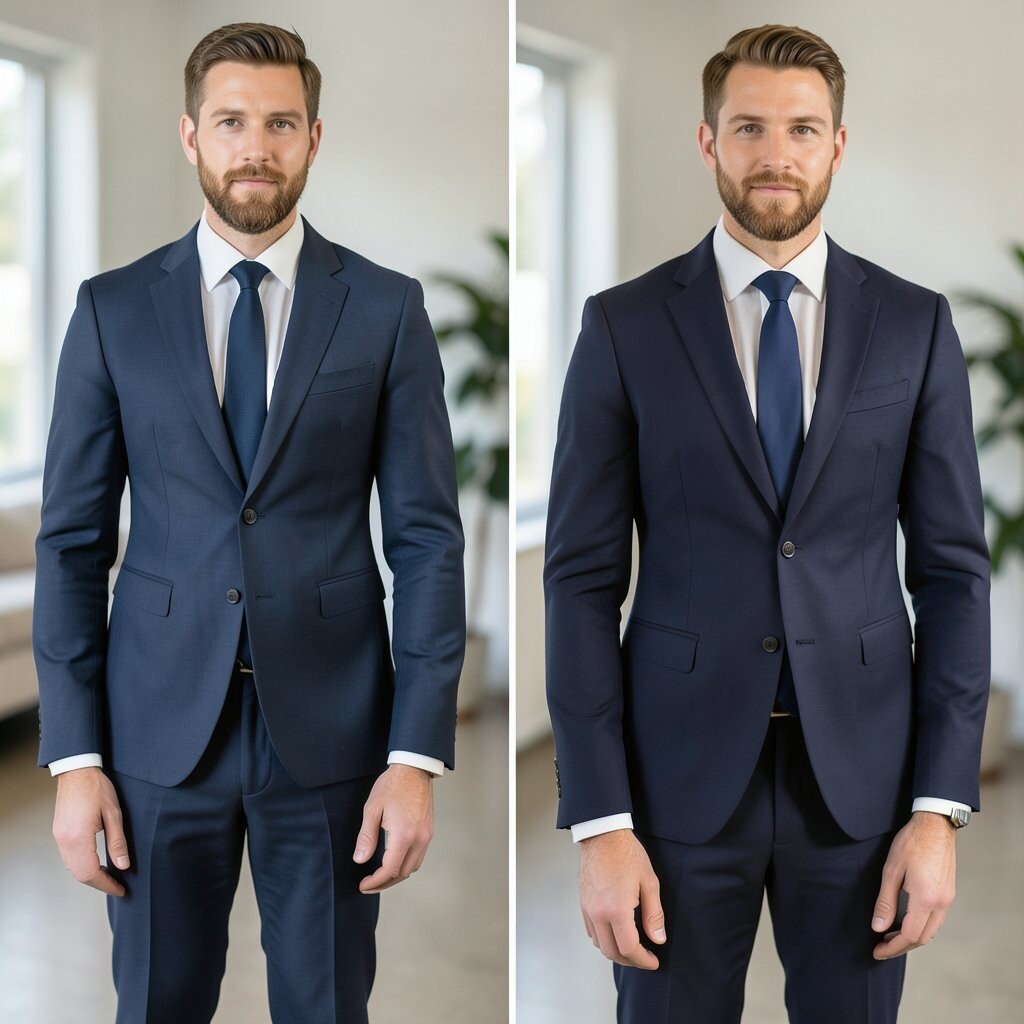
The before navy suit can look cool-toned and a bit distant in skin tone photos. When the undertone is wrong for your complexion, even a perfect fit can feel less flattering.
After adjusting toward a warmer navy or adding subtle contrast, the suit looks more natural. Small shifts like a slightly lighter pocket square or warmer belt tone can help your face glow.
Consider how your wedding lighting will look, especially if the event has lots of golden bulbs. A warmer palette tends to look inviting in those scenes, and it photographs beautifully with skin tones.
8. Pocket Square Copycat to One Thoughtful Color Accent

Before, the pocket square might be the same exact white as your shirt, making the suit feel flat. It can also get lost if your tie or jacket has strong patterns.
After choosing one thoughtful accent color, your outfit gains a small signature. A folded pocket square in a muted shade can make the look feel intentional without being flashy.
Keep it simple by picking a color from your bouquet, boutonniere, or venue decor. Try a presidential fold for clean lines, or a puffier fold for a softer, romantic mood.
9. Buttoned Jacket to the Perfect Half-Open Posture

Before, a fully buttoned jacket can feel stiff and can restrict movement during hugs and speeches. It may also make your torso look shorter in standing photos.
After styling the jacket half-open for photos and parts of the reception, you create an elegant line. When the jacket sits the right way, your waist looks more defined and your stance feels relaxed.
Practice with a mirror so you know exactly when to button and when to loosen. This turns your posing into something natural, not forced.
A helpful personalization trick is to make sure your tie knot stays centered even when the jacket is unbuttoned.
10. Standard Dress Socks to Hidden Comfort and Color Pop
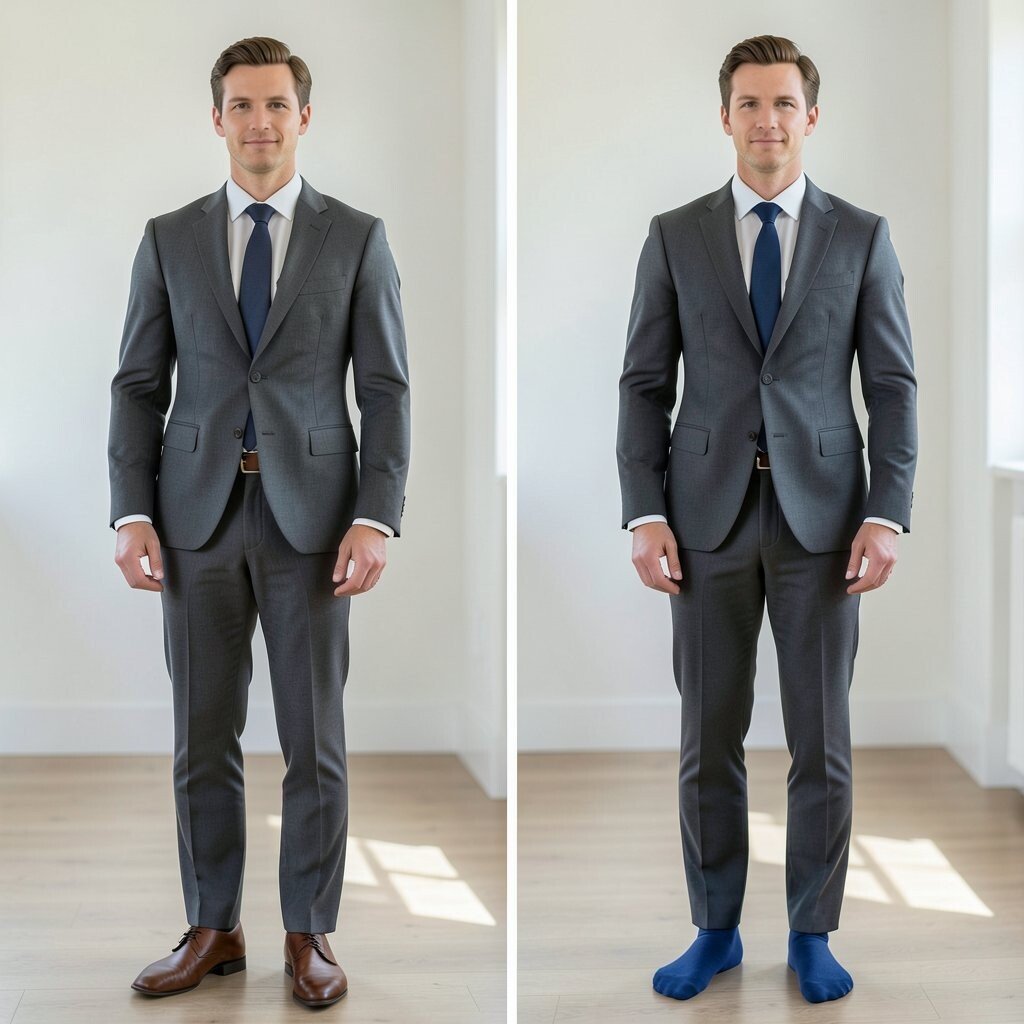
Before, plain socks can hide in the shadows but still affect comfort. If the fabric feels itchy or thin, it shows in how you stand and walk.
After upgrading to comfortable socks with the right thickness, your feet feel supported all day. Choose a color that matches your tie or pocket square so small details look coordinated.
For warmth in chilly venues, pick breathable wool blends rather than thin cotton. If the wedding is hot, go for lighter knit socks that still hold shape.
11. Breathable Suiting Swap for a Seam That Holds All Day
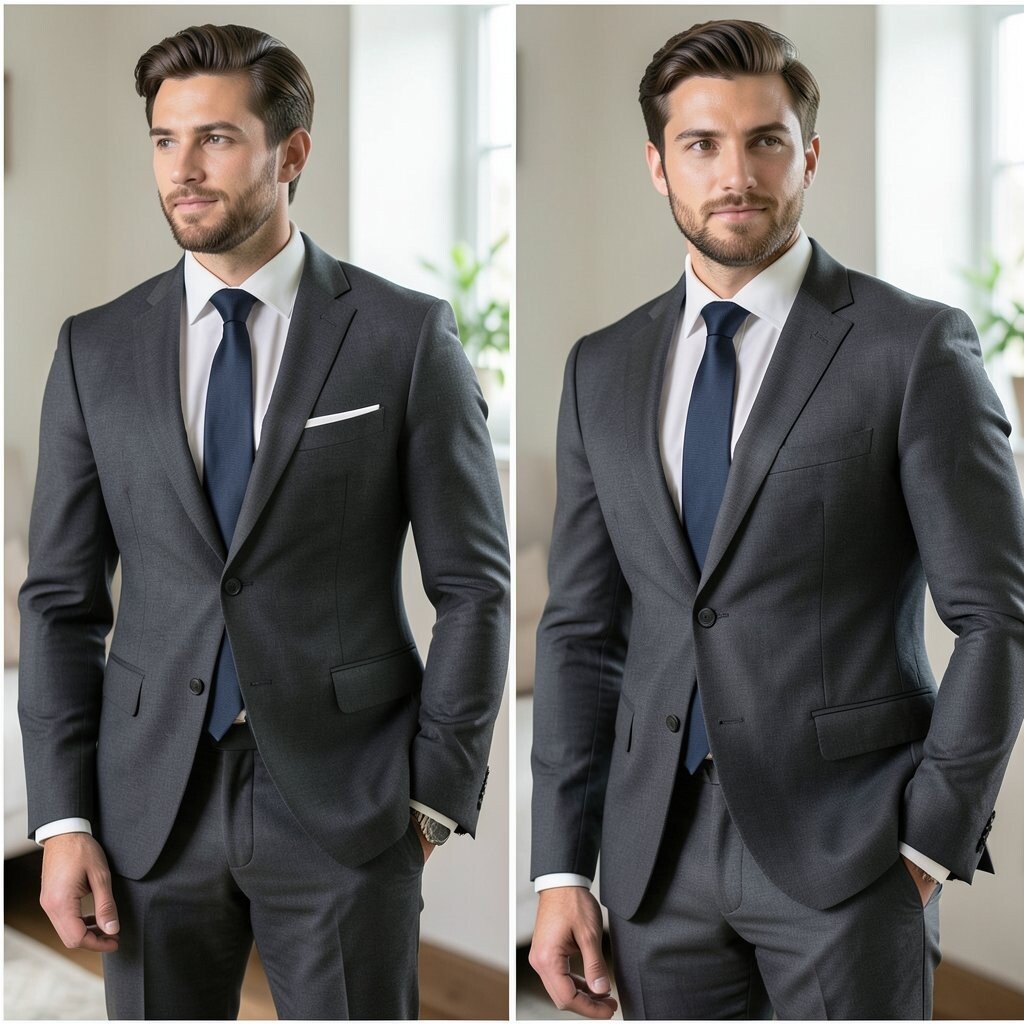
The before suit might be made of fabric that wrinkles quickly or feels heavy in warm rooms. You can look sharp at the start and then feel tired by the ceremony.
After switching to breathable suiting and stronger seams, your jacket stays neat even when you move. This kind of upgrade helps your outfit survive meals, photos, and the long walk down the aisle.
Ask your tailor or shop about fabric blends that suit your season. You can keep the same color and silhouette but change the feel so you look fresh from first look to last dance.
12. Plain Belt to a Matched Metal Buckle Statement
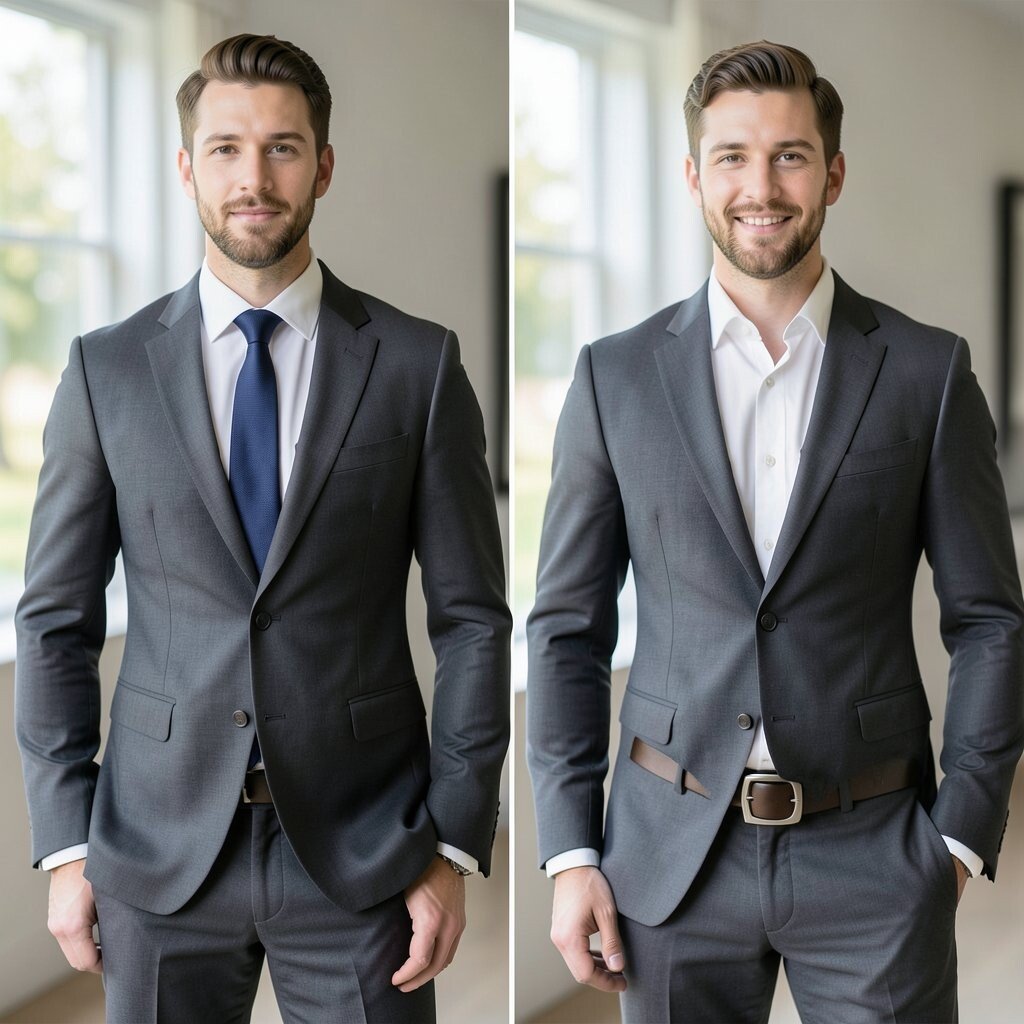
Before, the belt may blend so much that it disappears in photos. That can make the waist area look unfinished, especially with a fitted vest.
After choosing a belt with matching metal and a clean finish, your outfit looks more complete. When the buckle aligns with your watch or cuff buttons, the whole look feels coordinated.
For practicality, pick a belt width that fits your trousers and keeps the seam lines tidy. If you wear a wedding ring, choose shoes and belt in a tone that doesn’t clash with the metal glint.
13. Straight-Leg Trousers to a Slight Taper for a Sleeker Line
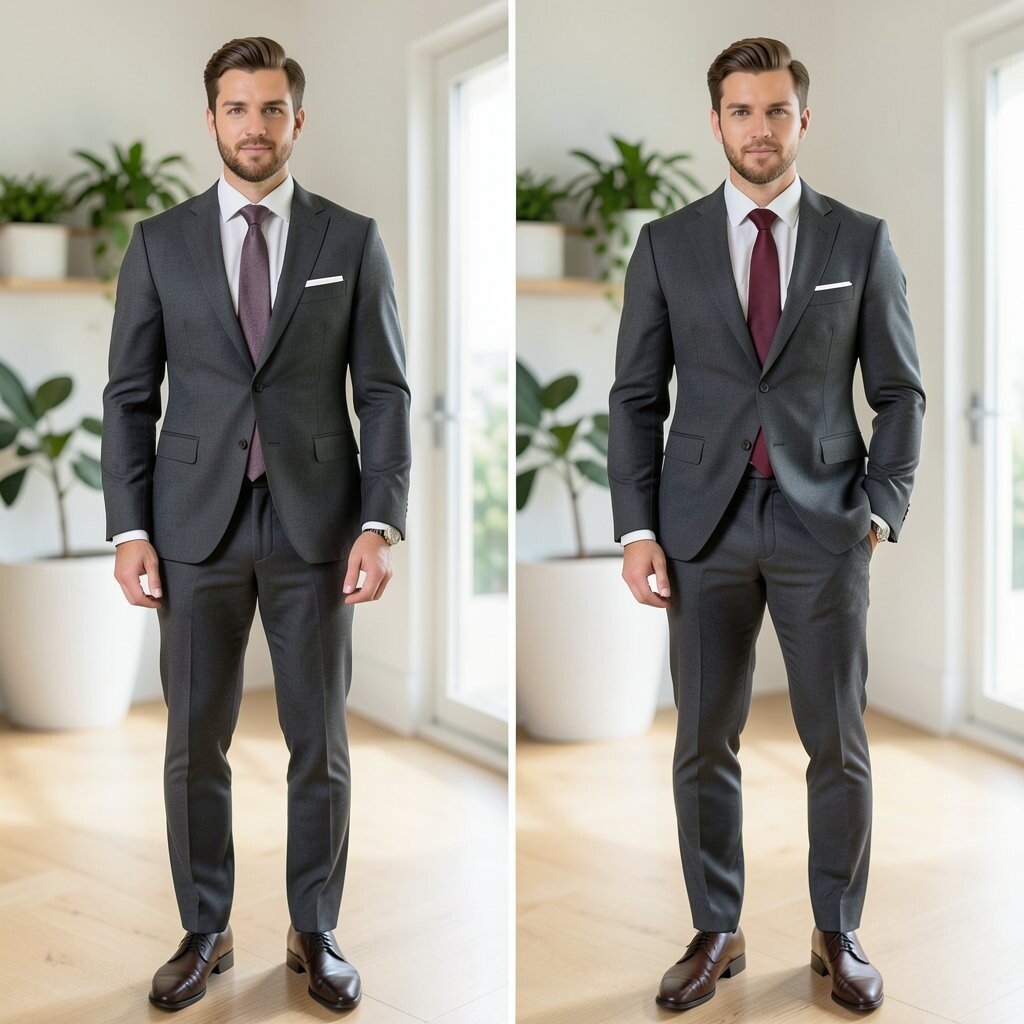
The before trousers can be straight and roomy, which makes the suit feel less sharp. In pictures, extra fabric can bunch around the ankle and hide your shoe detail.
After adding a subtle taper through the leg, you get a cleaner line that looks modern. A well-shaped trouser also makes walking feel smoother, so you don’t fight the fabric.
Try matching the taper level to your shoe style so the final look feels balanced. If you want a small trend signal, choose a slightly higher break so the trousers sit crisp near the shoe.
This evolution is especially helpful for outdoor weddings where you need your clothes to stay neat while moving.
14. Standard Lapel to a Rounded Edge That Softens the Face

Before, a traditional lapel style can sometimes make the neckline feel harsh. That may not flatter your face, especially with certain shirt collars.
After shifting to a lapel with a slightly rounded edge, your face looks softer and more framed. The change also affects how light hits your jacket, creating a more friendly look.
When selecting this change, pay attention to collar height so everything meets cleanly. Pairing it with a well-fitted shirt collar helps the suit read sharp but not severe.
15. Store-Bought Wrist Cuff to Personalized Cuff Style With Meaning
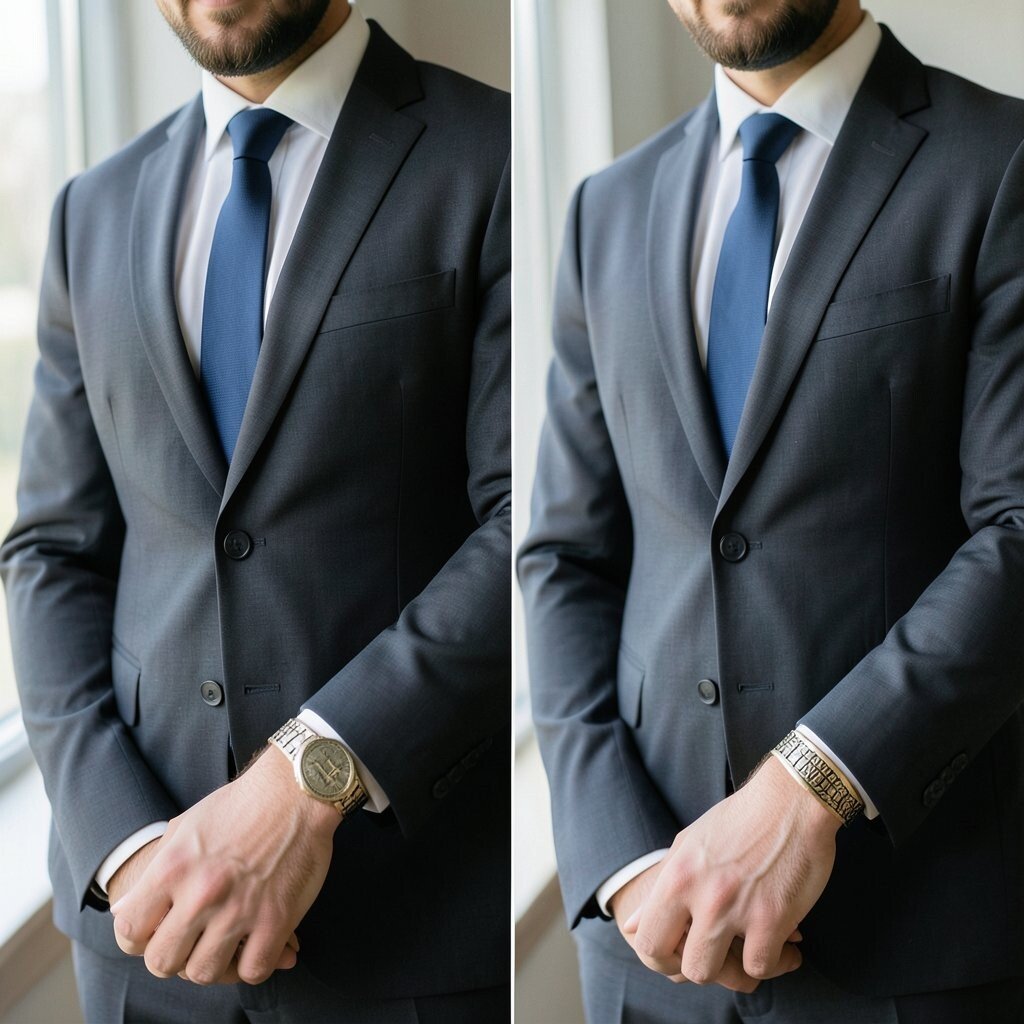
Before, cuff style might be overlooked and left plain. But your hands are in so many photos, from buttoning the jacket to holding a bouquet.
After adding cuff details that match your wedding story, your outfit feels more personal. French cuffs with cufflinks in a family metal or meaningful symbol can turn everyday moments into keepsakes.
For practical planning, decide early what you want your cufflinks to say and keep them easy to secure. If you want variety, choose one subtle design for ceremony photos and a slightly bolder one for the reception.
Even if cuff details are small, they make your groom look feel thought through, not generic.
16. Overly Formal Topcoat to a Layer That Fits the Venue
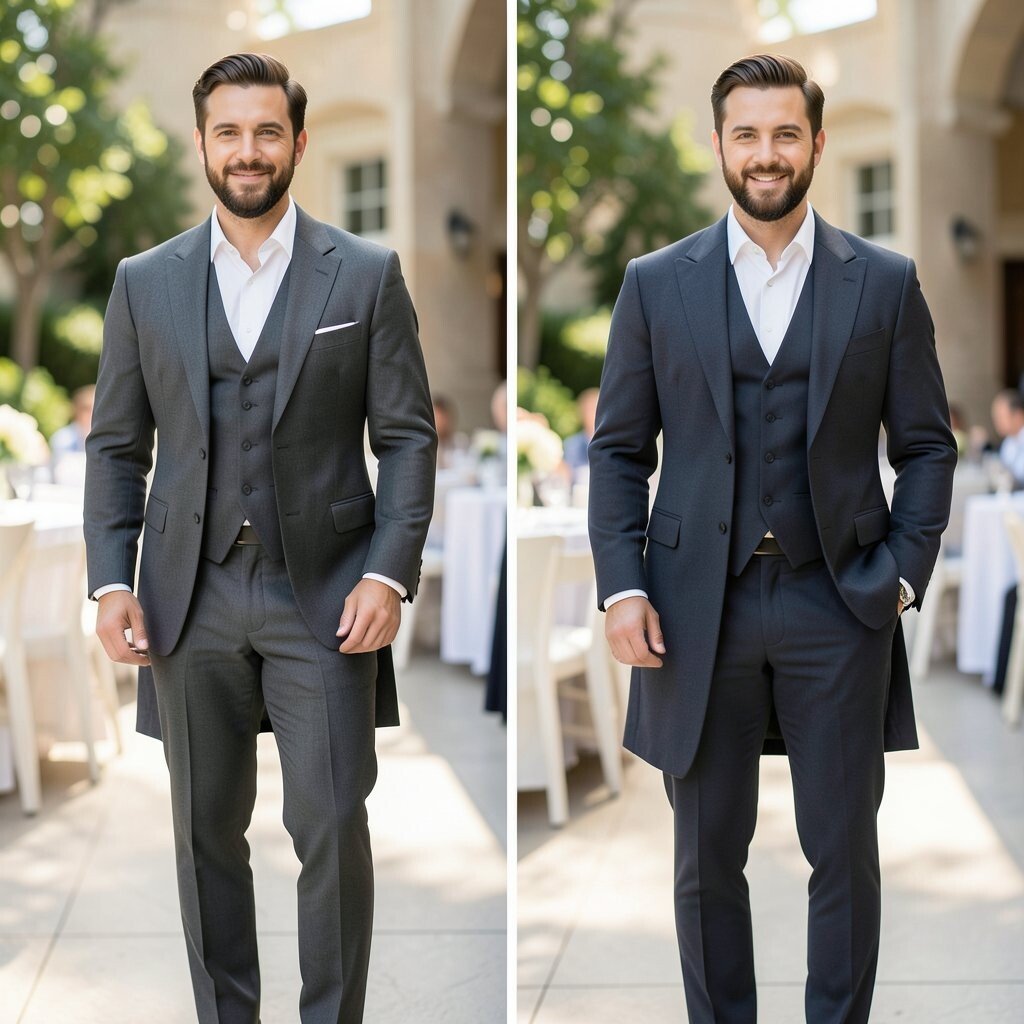
Before, a heavy topcoat can make the groom look too bundled or even swallowed by the outfit. It can also hide the jacket details you worked hard to style.
After choosing a lighter layer like a refined overcoat or a sleek blazer-style coat, your look stays elegant. The right layer also helps you stay comfortable during outdoor wind or evening air.
Think about your venue and how you’ll move, like stepping from car to aisle. A good layer should keep your suit lines looking clean when you remove your outer piece.
17. One-Color Suit to a Subtle Pattern That Signals Your Personality

Before, a single solid color can look classic but feel like every other groom. It might also look too similar to the surrounding decor in group photos.
After choosing a subtle pattern such as micro-check or a faint texture weave, the suit gains personality. The pattern adds uniqueness without stealing attention from your face.
For cost considerations, you can often find patterned suiting at a similar price point, especially if you select a common weave. Quality still matters, so prioritize fit and fabric feel even when the pattern looks simple.
To personalize, match the pattern scale to your venue distance, with finer patterns for formal halls and slightly bolder ones for open spaces. When the pattern is chosen well, it looks like you planned every detail, because you did.