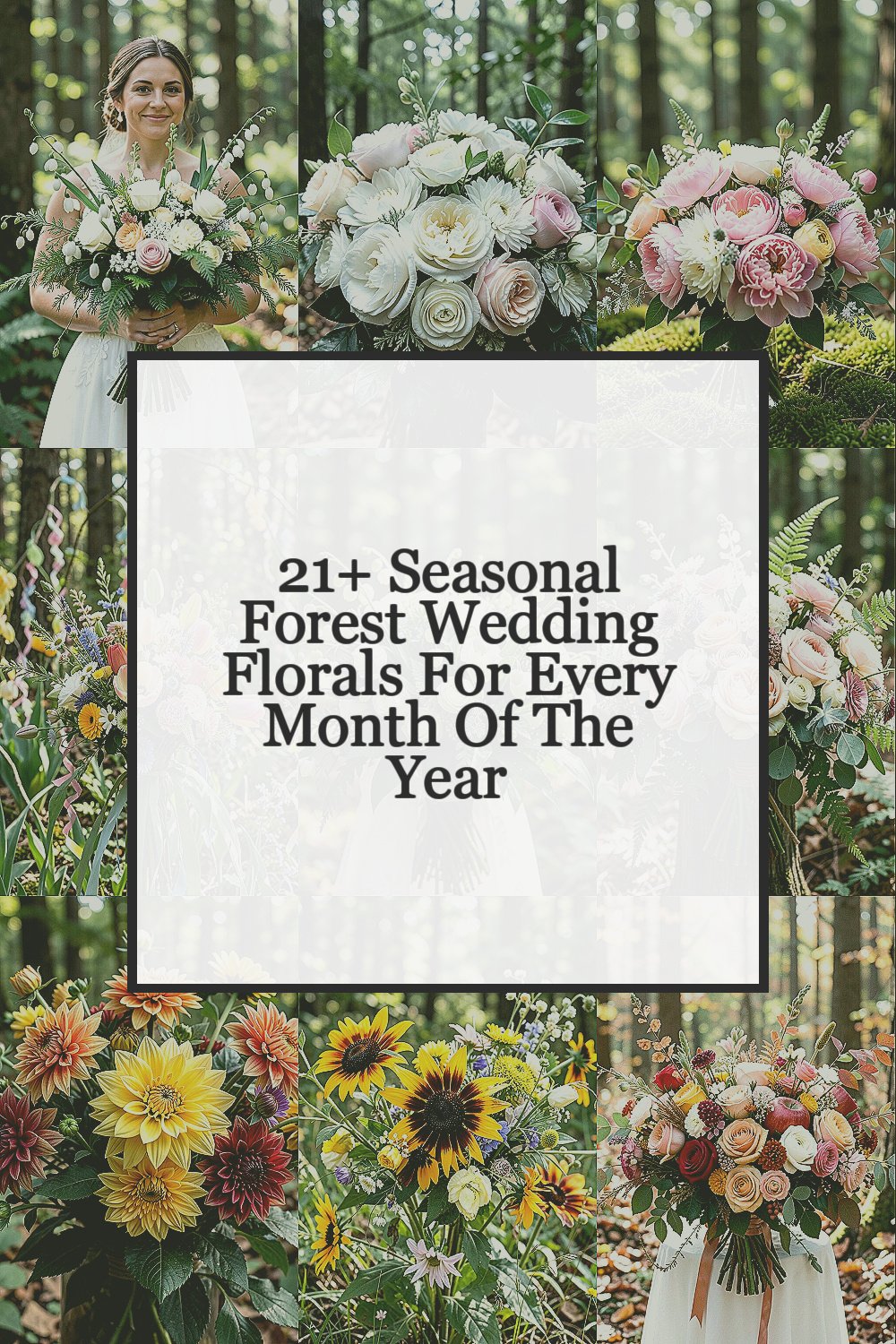
The forest has a quiet way of making flowers look even more special. Each month brings its own colors, scents, and textures that feel made for a woodland celebration.
From airy spring stems to rich winter greens, you can build a ceremony that matches the world outside your venue. Let these ideas guide your bouquet, aisle moments, and table flowers while keeping everything practical and budget-smart.
1. January Snowdrop & Evergreen Whispers
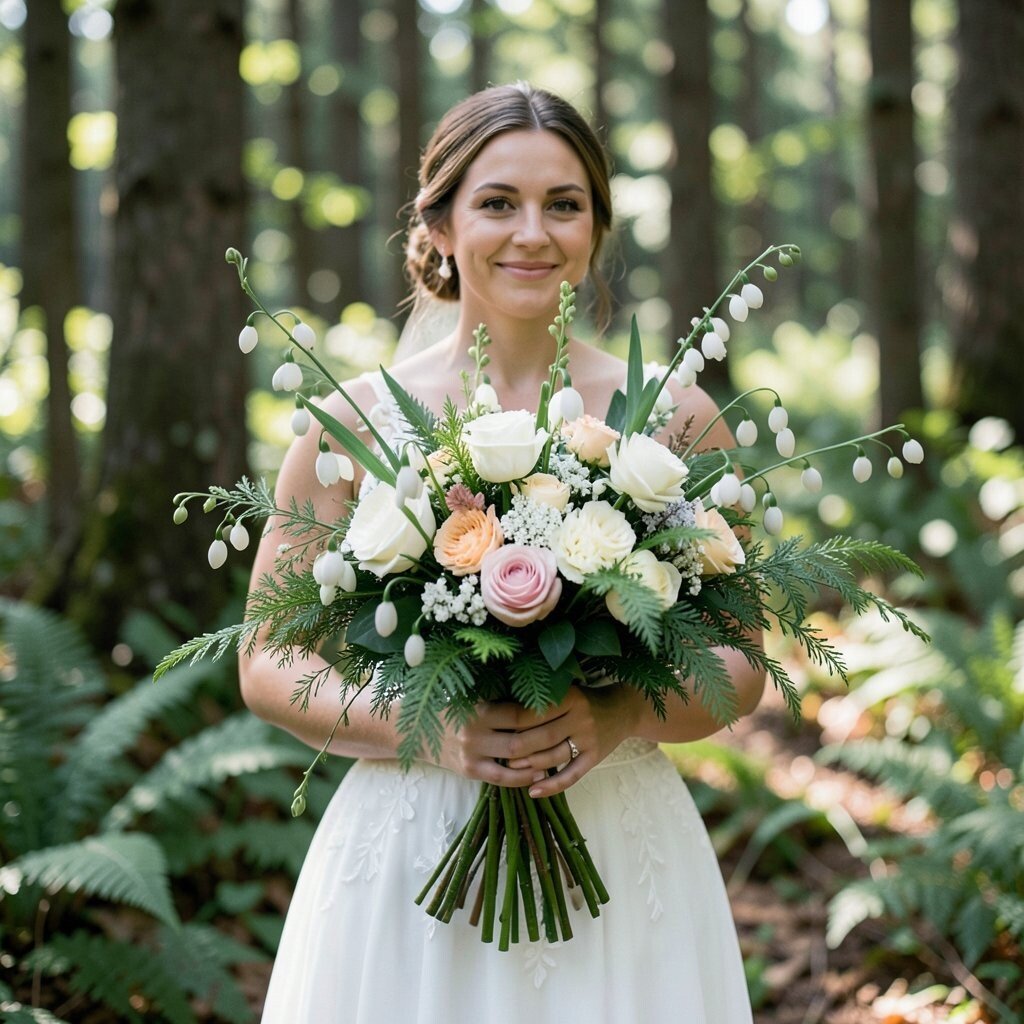
Think crisp greens, frosty whites, and tiny snowdrop heads that look like they’re peeking from a shaded path. Pair them with cedar, pine tips, or eucalyptus so your arrangement feels cold-weather fresh without looking harsh.
A white and green palette helps photos look clean and elegant, even in dim forest light. Use a ribbon in dusty blue or soft silver to tie in that winter sparkle, and keep stems shorter for an easy, sturdy bouquet that won’t droop.
2. February Camellia Glow in Cool Shade
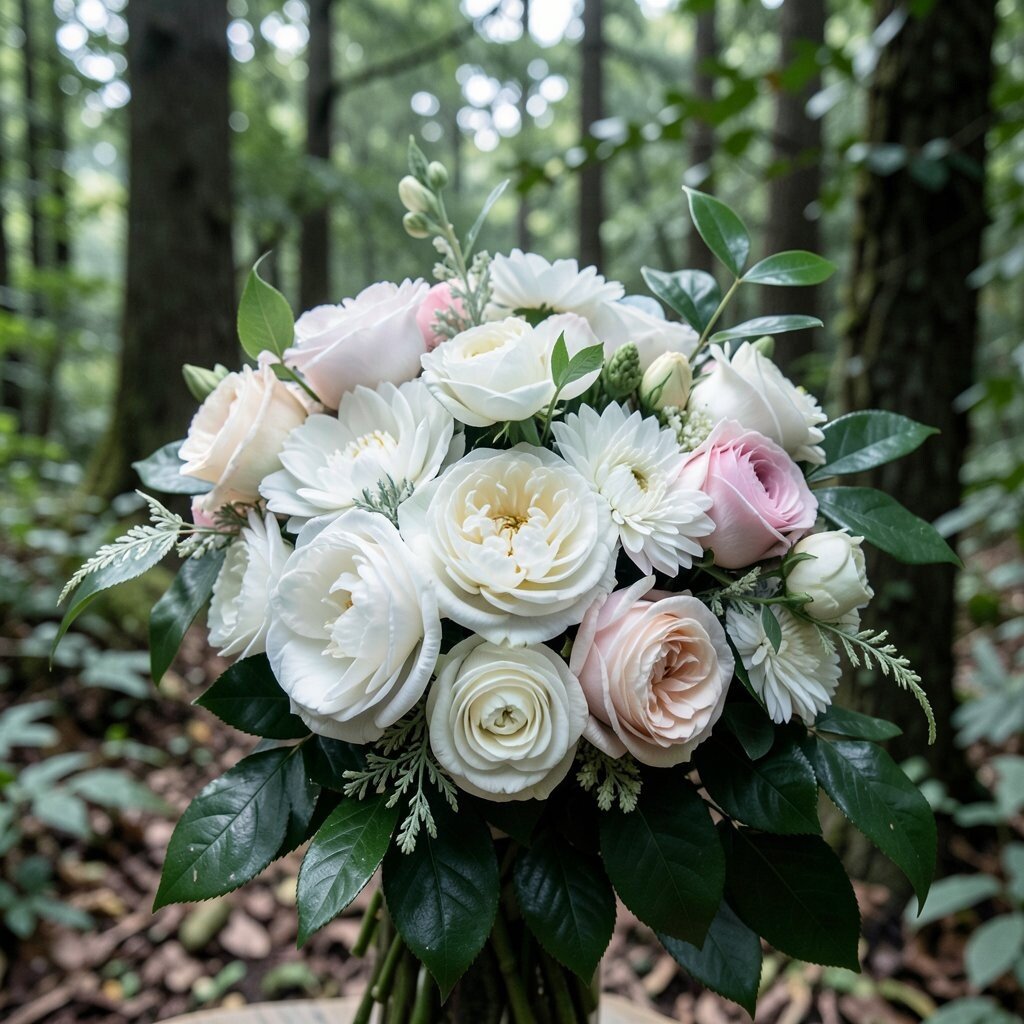
Camellias bring a smooth, layered look that feels romantic without being fussy. Add branches of winterberry or variegated holly leaves for pops of color against the forest’s deep browns.
This month’s florals shine for indoor ceremonies with warm lighting because the petals catch the glow. If you want an easier setup, choose a smaller bouquet with a few strong blooms and let the evergreen foliage fill in the shape.
For a budget-friendly twist, mix camellias with more affordable filler like fragrant carnations or anemone-like blooms in similar tones. Finish with a simple wrap of burlap and satin so the bouquet feels both rustic and polished.
3. March Peony Promise with Mossy Texture
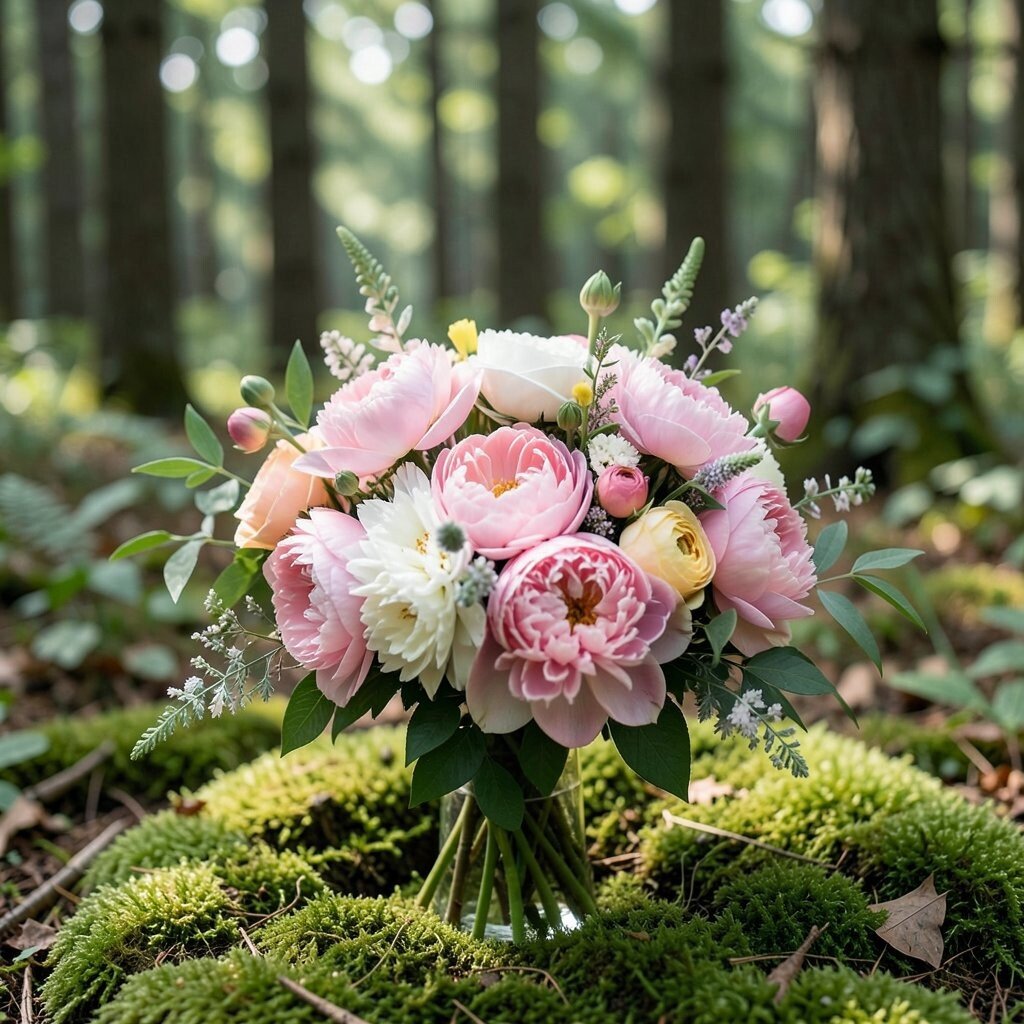
In early spring, peonies and anemones can give you that “new life” feeling with soft colors and full shapes. Add mossy accents and fern fronds so your centerpiece looks like it belongs on the forest floor.
Peonies make a bold focal point, while greenery keeps the arrangement airy. Choose a mix of pale blush, creamy white, and hints of light green to keep the look gentle instead of heavy.
To make it practical, ask your florist about using peony-style blooms that may be available in-season locally. You can also create a peony-inspired look by using ranunculus or garden roses that open quickly and hold up well for photos.
Personalize with a small charm tied to the bouquet ribbon, like a pressed leaf pendant or a coin-sized locket. That little story detail helps your florals feel like you, not like a store display.
4. April Tulip and Wildflower Streamers
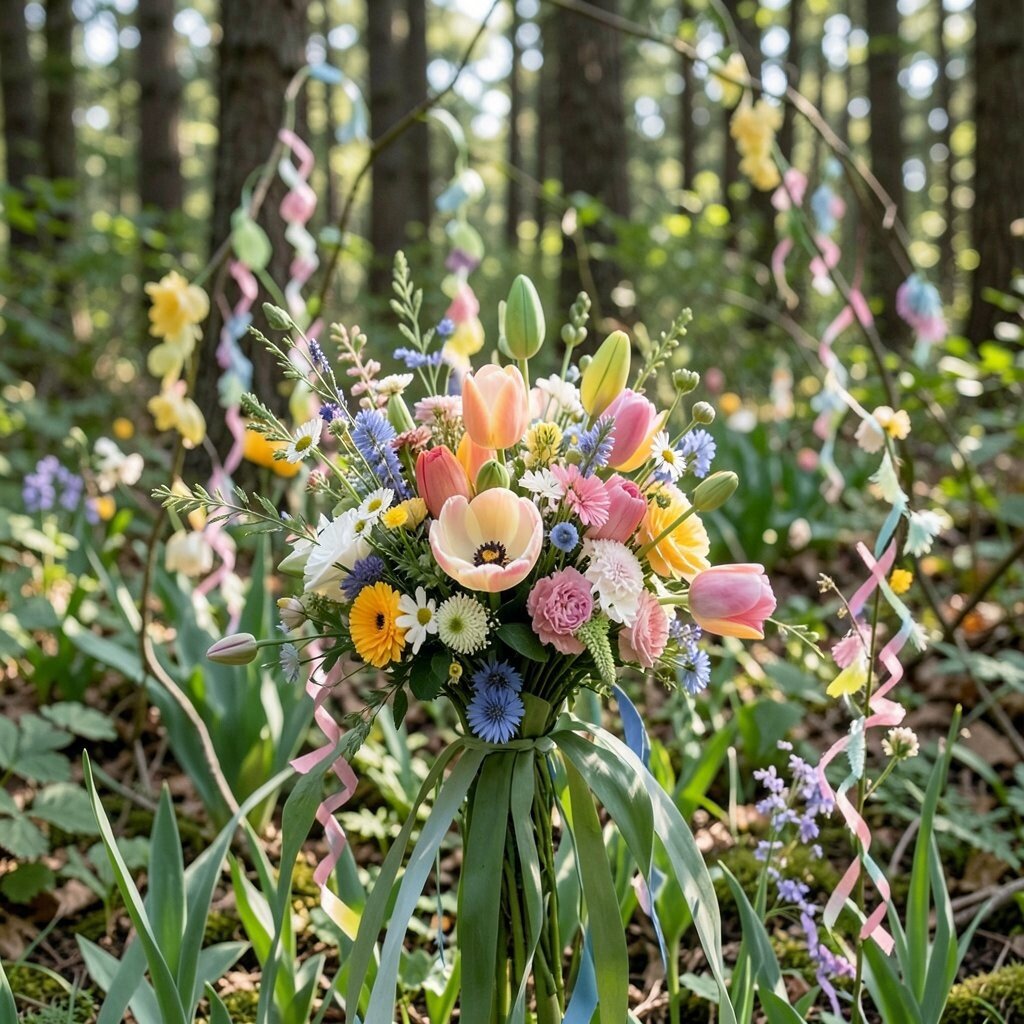
April calls for tulips that look bright and hopeful, especially when they’re paired with delicate wildflower textures. Use grape hyacinth, daisies, or sweet pea stems to create a light, moving feel along the aisle.
These blooms benefit from simple placement because they naturally read as cheerful and informal. Keep bundles slightly staggered along the walkway so you don’t need thick floral coverage to get a full look.
5. May Lily of the Valley & Fresh Green Drama
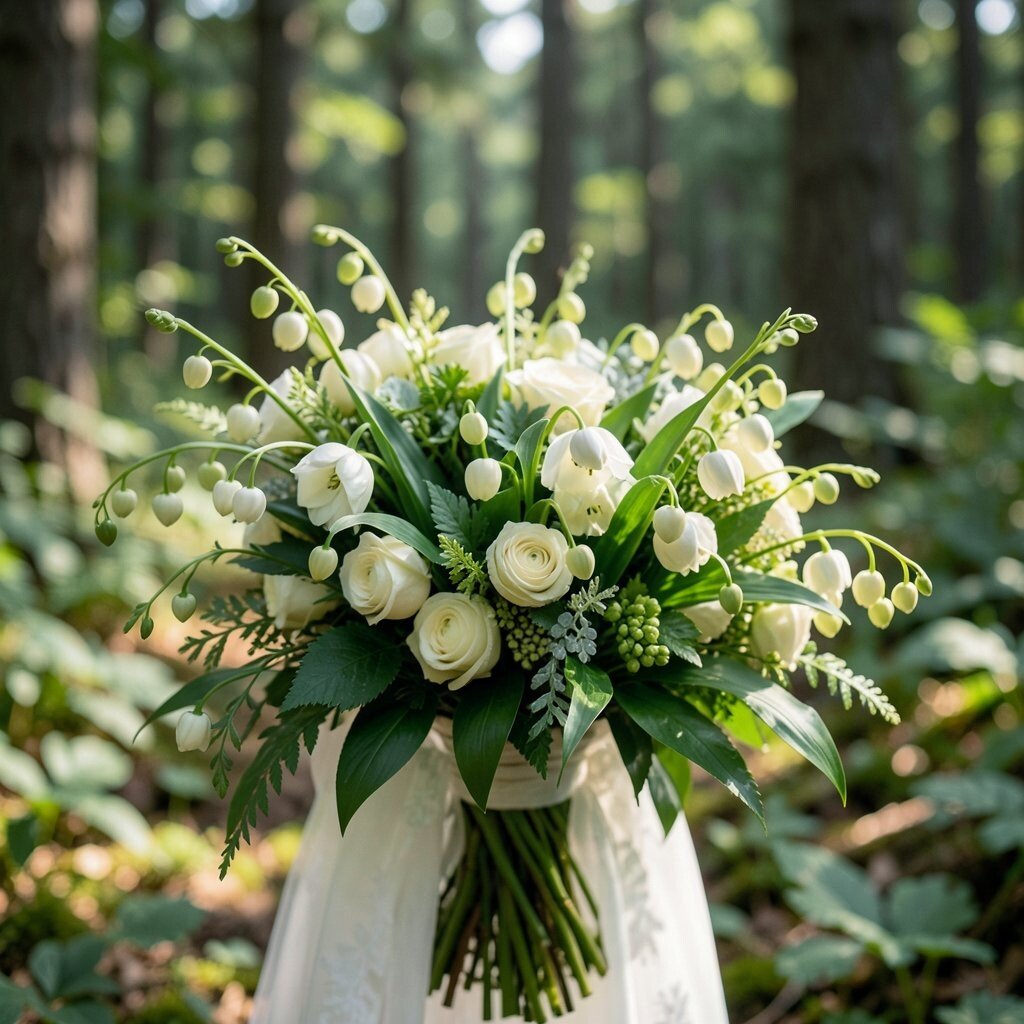
Lily of the valley brings tiny bell-shaped blooms and a sweet, classic scent. Surround it with glossy greens like magnolia leaves or sword fern to give your arrangements that lush forest drama.
Because the blooms are delicate, they look best in close-up spots like boutonnieres, bud vases, and small tabletop accents. Choose a limited number of focal clusters so you spend on quality blooms rather than large quantities.
For uniqueness, combine the bells with small sprigs of white blossom from locally grown trees if available. Add a thin gold wire to guide stems into neat arcs, which keeps the look tidy during setup and photos.
6. June Rosewood Romanticism and Fern Volume
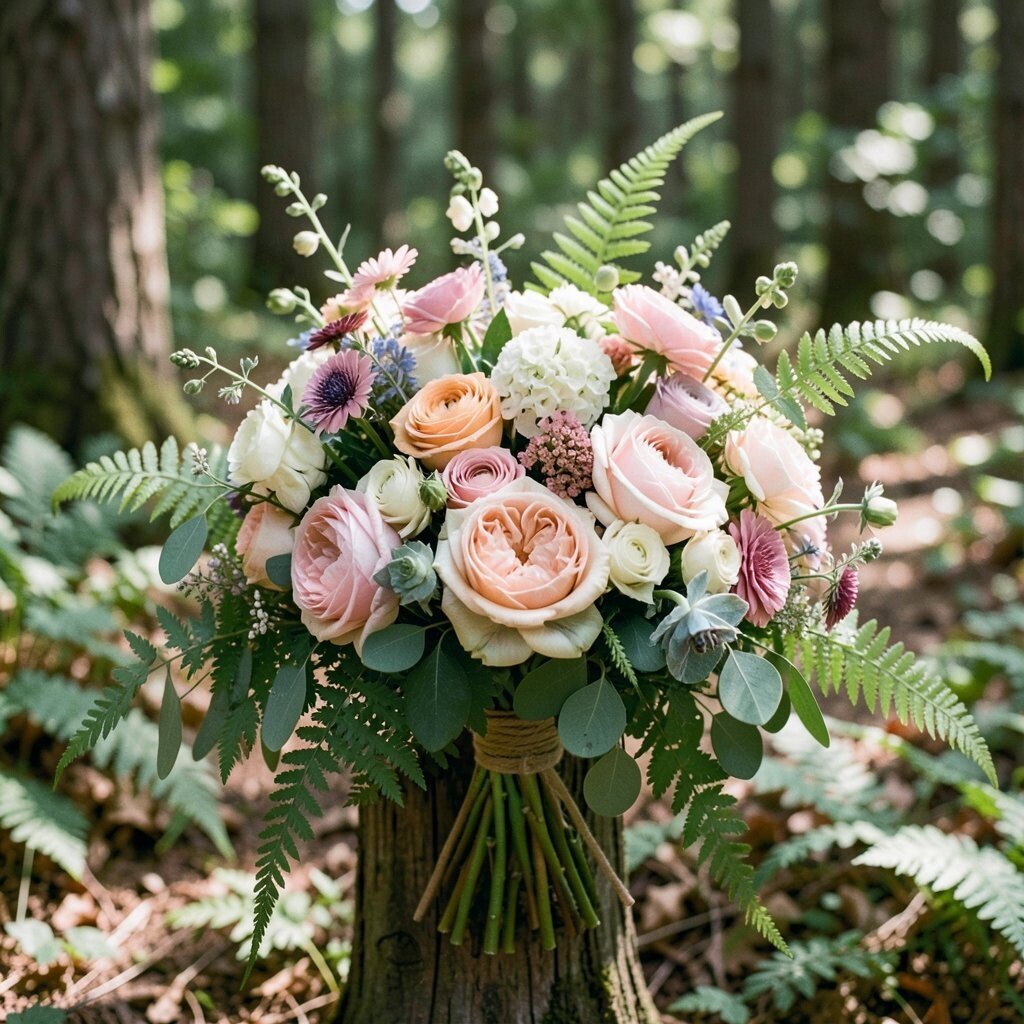
June roses can feel like they’re made for a woodland wedding, especially when you lean into dusty tones. Try soft rose, mauve, and warm blush, then add fern volume for that forest-grown texture.
Roses offer long-lasting petals, which is a real benefit on hot days when you need flowers to hold their shape. If your venue is outdoors, ask for early morning arranging and keep extra water on hand for quick refreshes.
For cost considerations, use fewer roses but add more fronds, berries, or branches to make the bouquet feel abundant. You can also mix in seasonal garden flowers that have similar color ranges so the palette stays cohesive.
7. July Sunlit Dahlias in Forest Colors
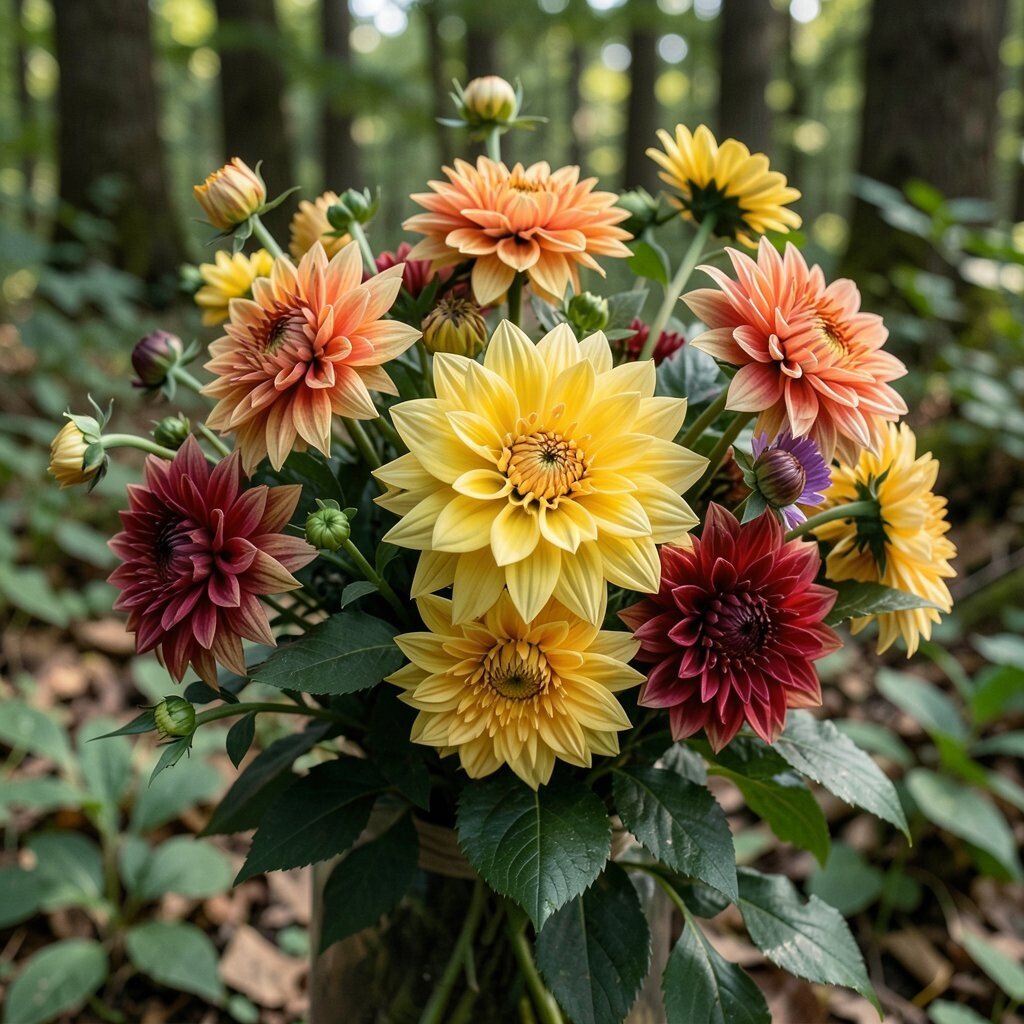
Dahlias are perfect for July because they look bold, layered, and bright without needing a dramatic theme. Pair them with warm greenery like lemon balm or olive-like leaves so the colors feel sun-warmed.
These blooms bring uniqueness because each flower is shaped like a tiny work of art. Consider creating a “sunset cluster” look with orange, coral, and peach dahlias, then calm it down with deeper green foliage.
For practical setup, choose stems that you can handle easily and use grid foam or sturdy vessels for centerpieces. That way, you get clean lines and fewer last-minute adjustments.
Personalize with a color tie to your wedding palette, like matching ribbon shades or repeating a single dahlia color across bouquet and boutonniere for a unified story.
8. August Black-Eyed Susan and Meadow Edge
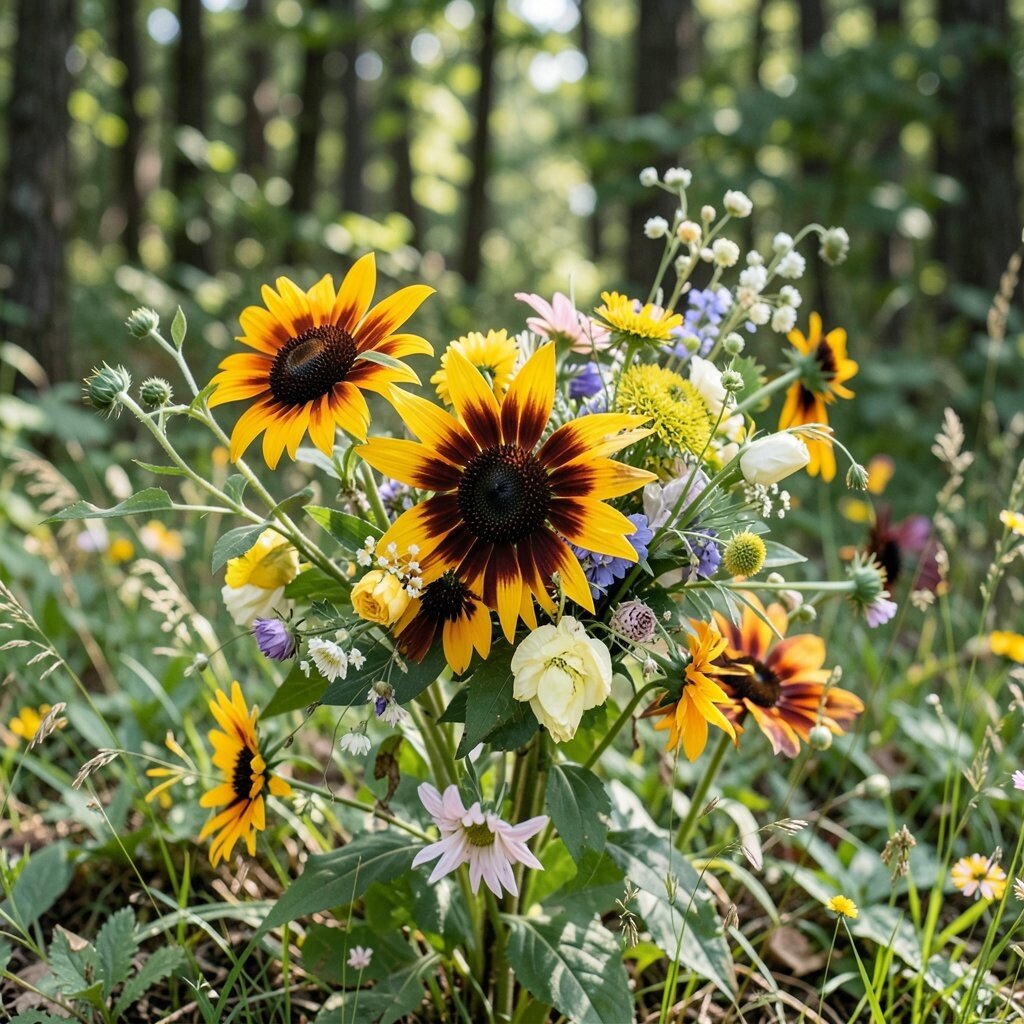
August can lean into meadow energy with black-eyed Susans that feel natural and joyful. Add airy grasses and seed heads so the bouquets look like they were gathered near a sunny clearing.
These blooms give a fresh, informal feel that works beautifully for rustic forest weddings. To keep everything stable, use slightly thicker stems for the base and let the lighter, airy grasses move from the top.
9. September Autumn Apple Blossom & Soft Spice
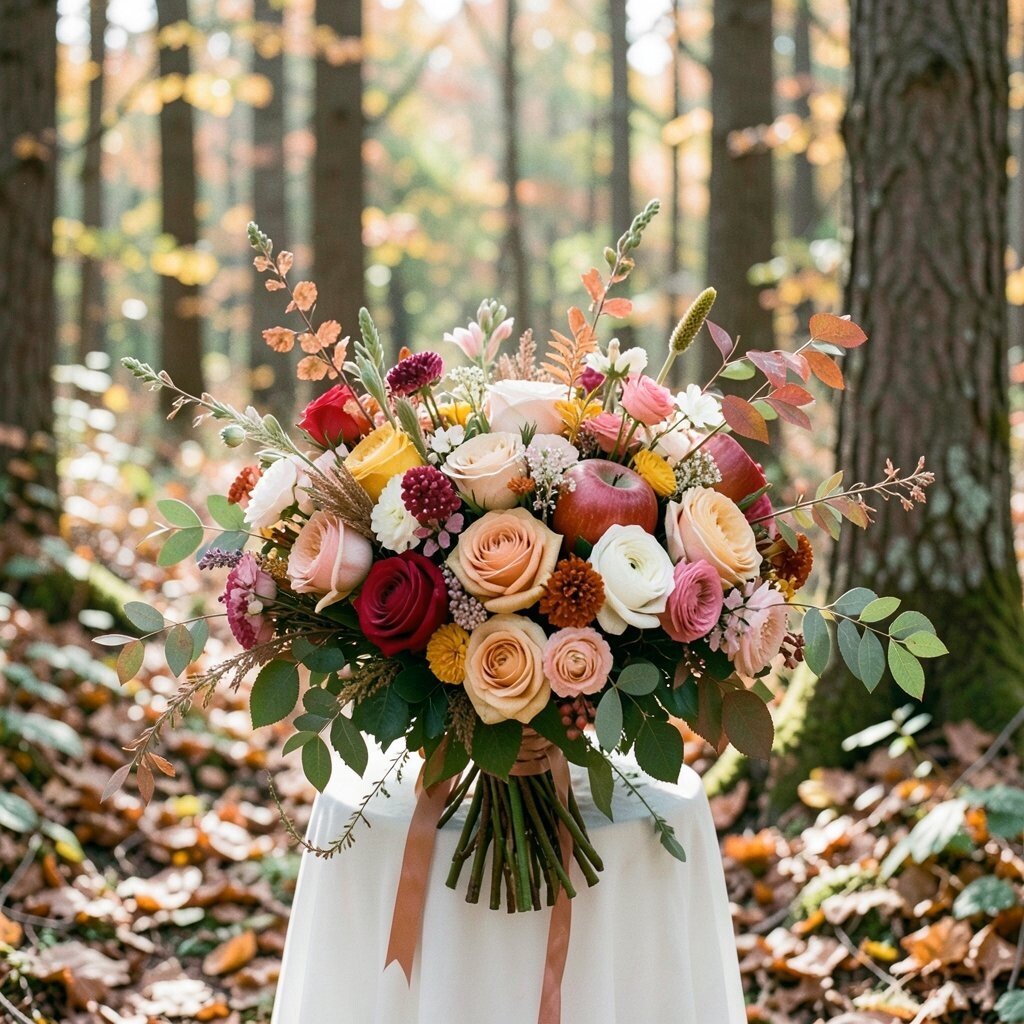
September is where late-summer color starts turning, and floral arrangements can mirror that slow change. Use dahlias, cosmos, and warm apricot blooms, then add small clusters of berries that echo early autumn.
A soft spice palette looks stunning against wood textures and natural stone. Add cinnamon-toned ribbon or subtle bronze accents so your florals feel seasonal without turning into a full fall theme too early.
For personalization, include a fruit-inspired element like apple-toned silk ribbon around the bouquet wrap. If you want a fun twist, pair a few blooms with herbs such as rosemary sprigs for a garden-forward scent.
10. October Velvet Marigold and Dark Leaf Lushness
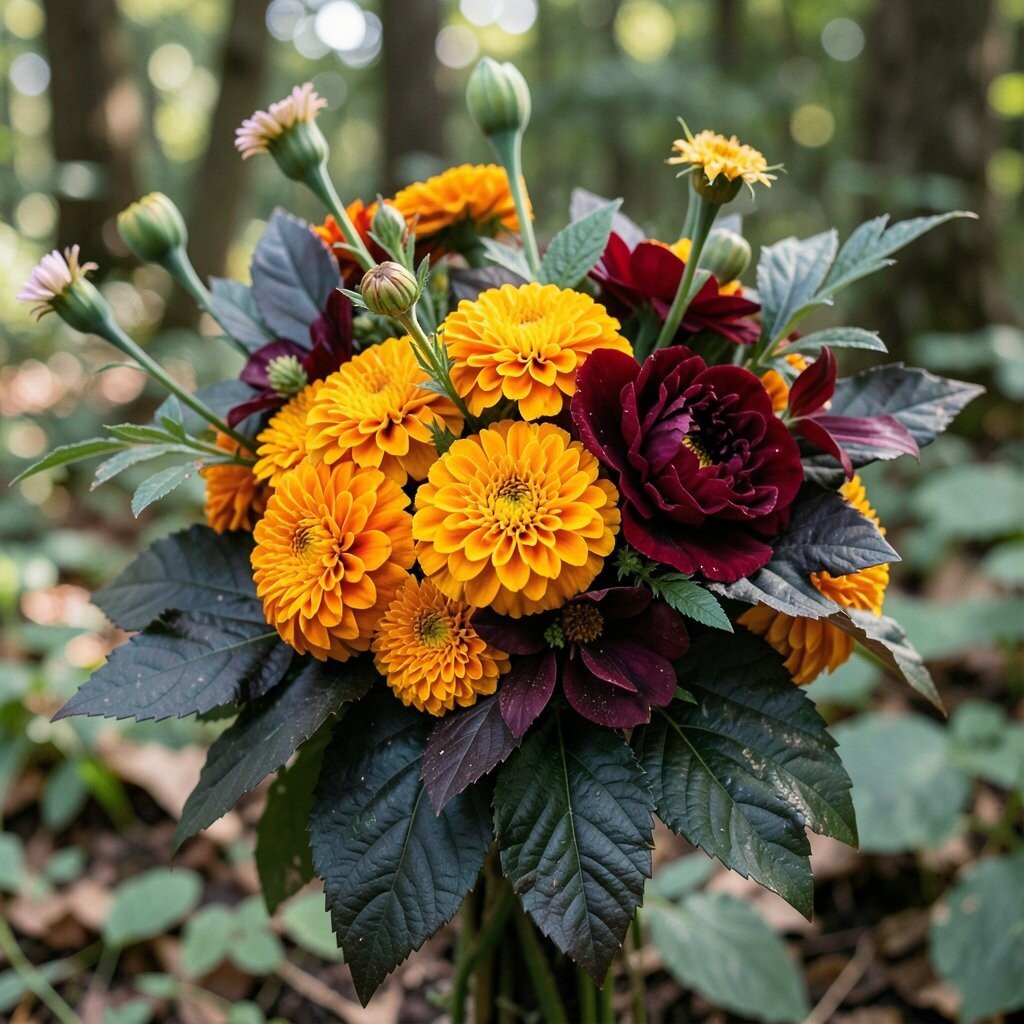
October florals can go richer, and marigolds are a great way to bring warmth to the forest palette. Pair them with deep green leaves and burgundy foliage so your arrangements feel like velvet and candlelight.
This month’s look benefits from contrast, because bright petals pop beautifully against dark leaves. Keep the structure slightly rounded so centerpieces look fuller even when the venue lighting is dim.
11. November Chrysanthemum & Pinecone Keepsakes
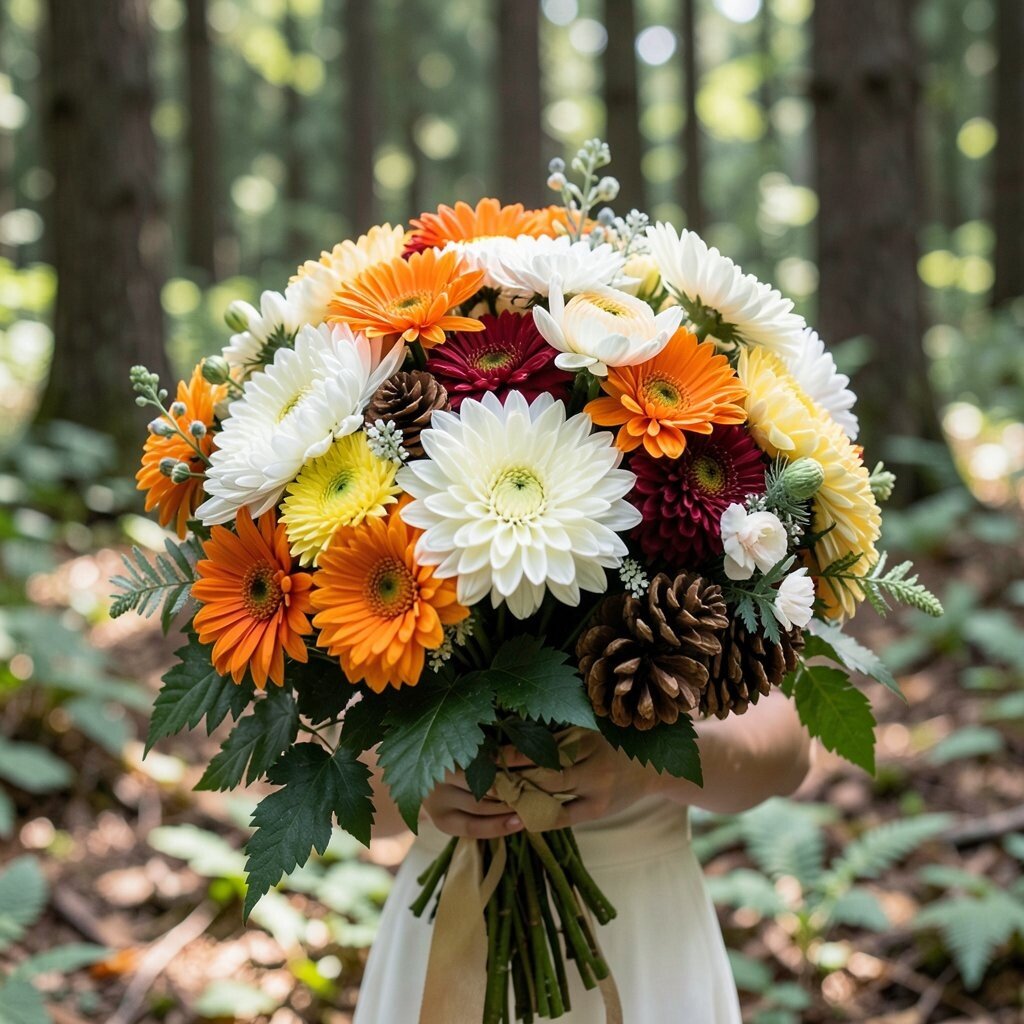
Chrysanthemums can look clean, graphic, and cozy, especially in cream, golden yellow, or muted rose. Add pinecones, fir branches, and textured greens for a forest feel that’s instantly recognizable.
Using natural elements like pinecones is a practical way to create uniqueness without spending extra on large volumes of flowers. Just be mindful that pinecones may shed, so keep them wrapped or placed carefully where guests won’t bump them.
Personalize with a small handwritten tag tied to a bouquet ribbon, or a family heirloom tucked into the greens. This gives your florals a story that feels personal rather than purely decorative.
12. December Holiday Holly and Frosted Branches
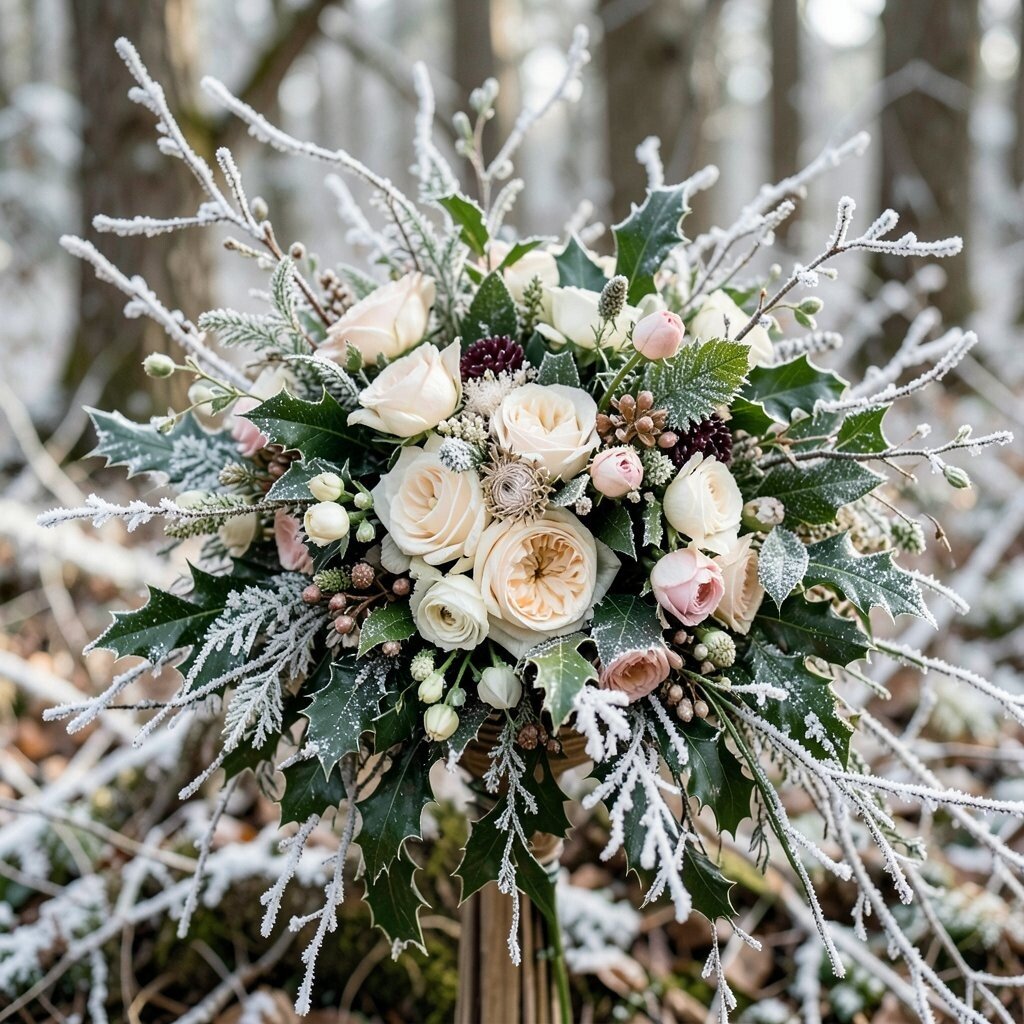
December arrangements can feel elegant when you mix holly, evergreen, and berries with soft white blooms. Add sprayed or naturally frosted branches for that winter sparkle look that fits the forest vibe perfectly.
Evergreen structures help your bouquets and centerpieces last longer through colder indoor days. If you’re hosting near windows, use reflective accents like silver ribbon so the sunlight catches the edges of your greenery.
For cost considerations, focus on one main bouquet and concentrate flowers on the ceremony focal points. Then use more evergreen-heavy centerpieces so your overall look stays lush even on a tighter budget.
13. January Birch Branch Minimalist Bouquets
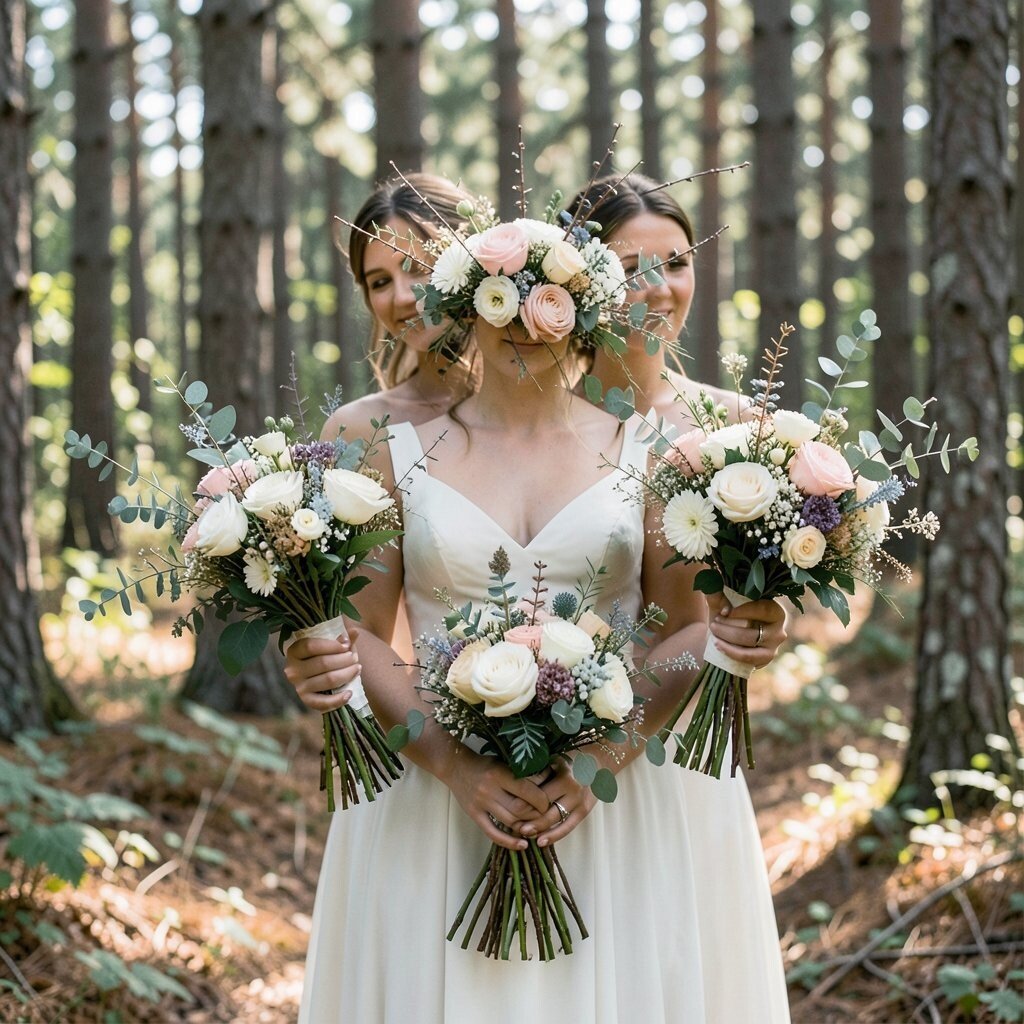
For a January-forward look, birch branches can make your bouquet feel airy and modern. Add small white blooms or pale green accents so the stems look like natural art.
This style benefits from simplicity, because the forest already gives you plenty of background beauty. Keep a tight color range and let the branches form the shape, which reduces the number of flowers you need.
14. February Ribbon-Tied Wild Roses in Frosty Tones
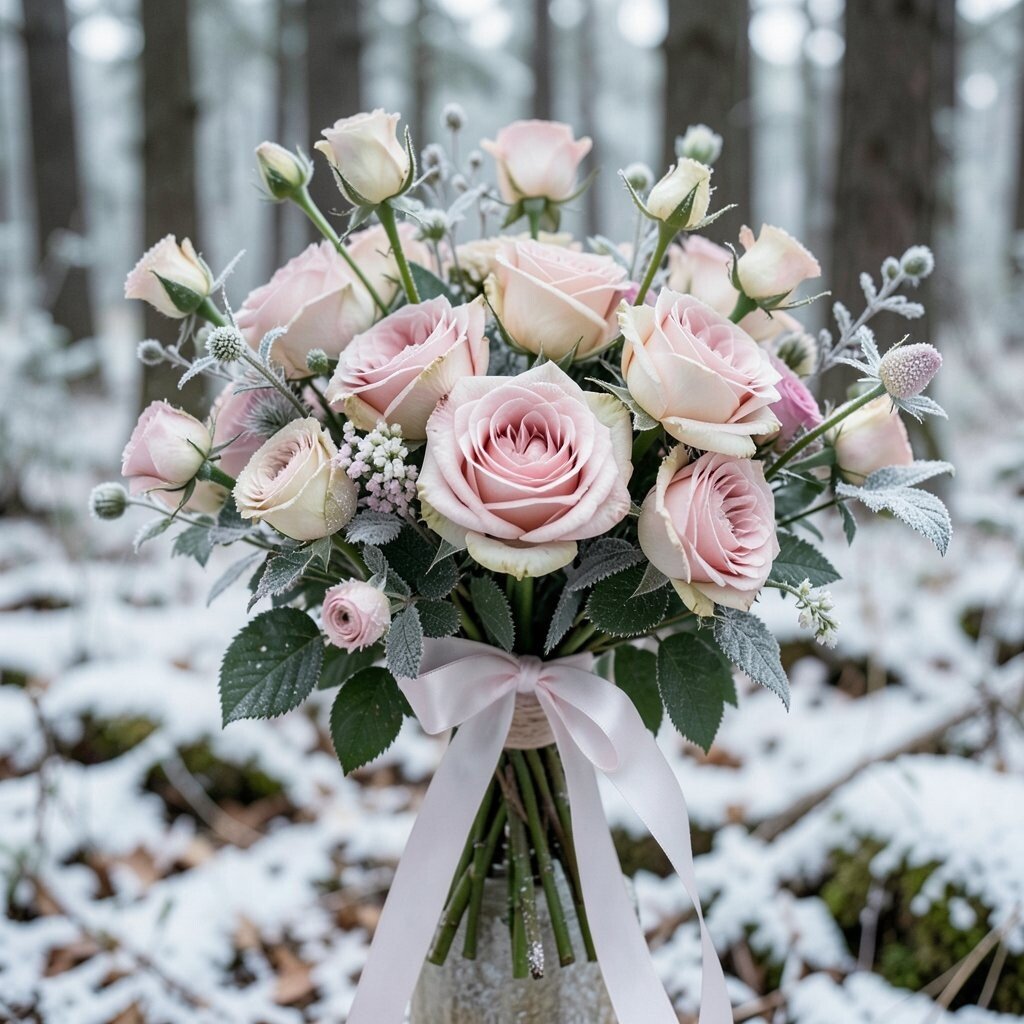
In February, you can soften the cold with wild rose-inspired blooms in light blush or icy pink. Tie everything together with a long ribbon that you can braid through the stems for a gentle, romantic look.
Roses and rose-like blooms create that classic wedding feel, while the ribbon adds movement for photos. Use a thicker ribbon fabric, and secure it with hidden pins so it stays neat from ceremony to reception.
For uniqueness, weave in small sprigs of something aromatic like eucalyptus, then cut the stems to keep it from overpowering the room. A light scent helps guests feel welcomed without creating discomfort.
To stay budget-smart, ask for a mixed bouquet using similar-colored blooms rather than relying on one premium flower type for the entire arrangement.
15. March Crocus & Soft Branches for Early Color
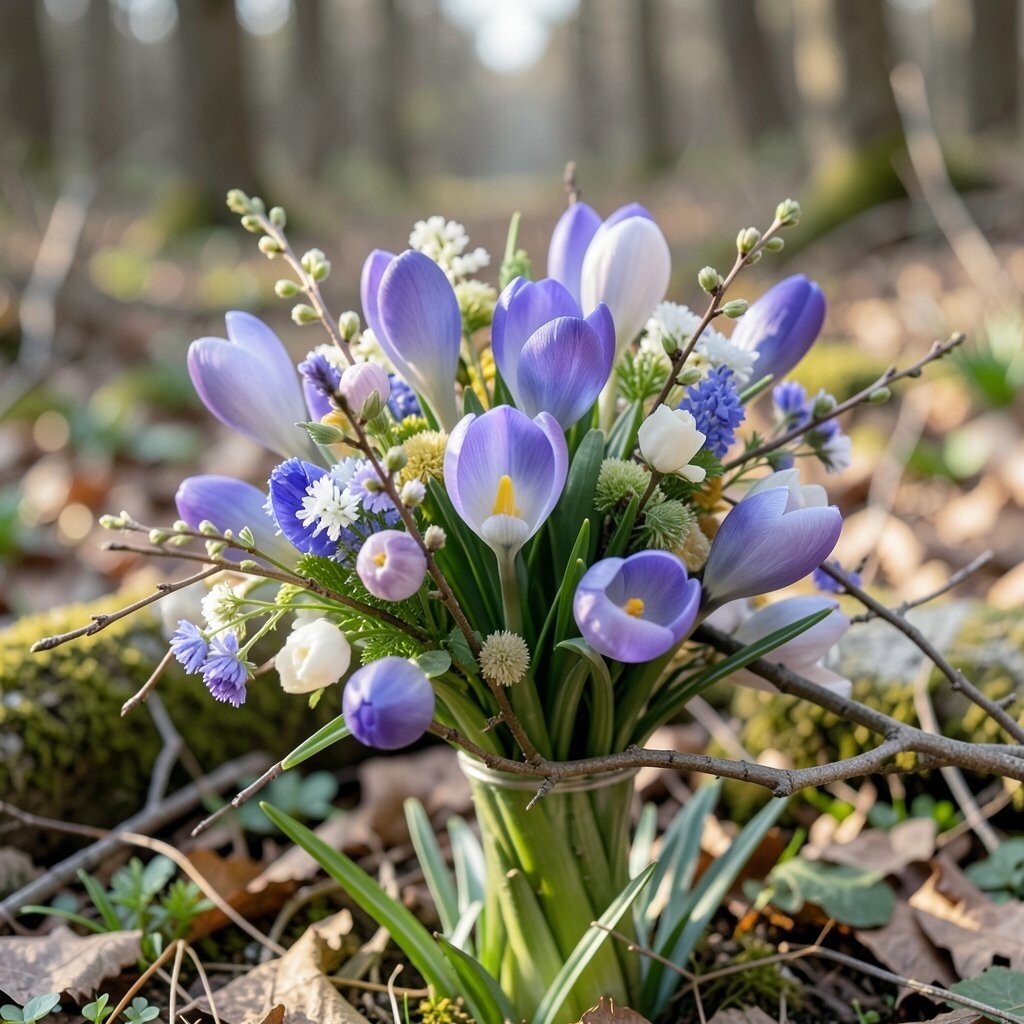
Crocus-like blooms and early spring branches can bring bright cheer right when the forest feels sleepy. Choose small clusters in purple, yellow, and cream, then add thin twigs for a light, floating look.
These early blooms benefit from being styled in low, simple containers where their delicate heads can be seen clearly. Use glass bud vases for a “collected from the woods” vibe that looks charming on tabletops.
Personalize with a shared color from your palette, even if it’s just one accent shade repeated across bouquets, cake flowers, and guest table bud vases. That repetition makes the whole wedding feel thoughtfully designed.
16. April Wisteria-Inspired Cascades and Soft Greens
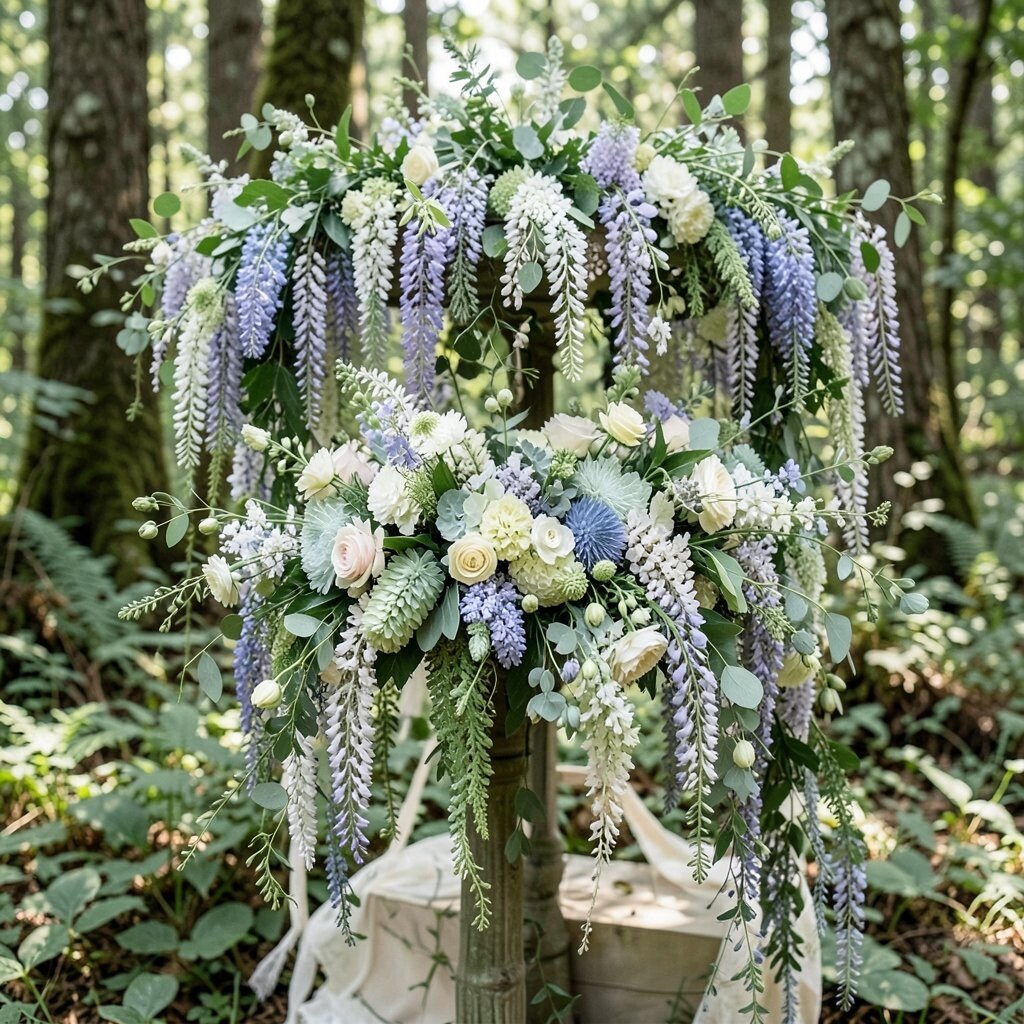
April can feature wisteria-inspired shapes with hanging or cascading floral placement, even if you use season-friendly substitutes. Try hanging sprays with sweet pea, dyed or naturally tinted blooms, and lots of soft green leaves.
These airy cascades look stunning behind a ceremony arch or along a woodland trellis. Keep the cascade light enough that it doesn’t block guests’ faces, and plan for wind if you’re outdoors.
17. May Hydrangea Cloud Centerpieces
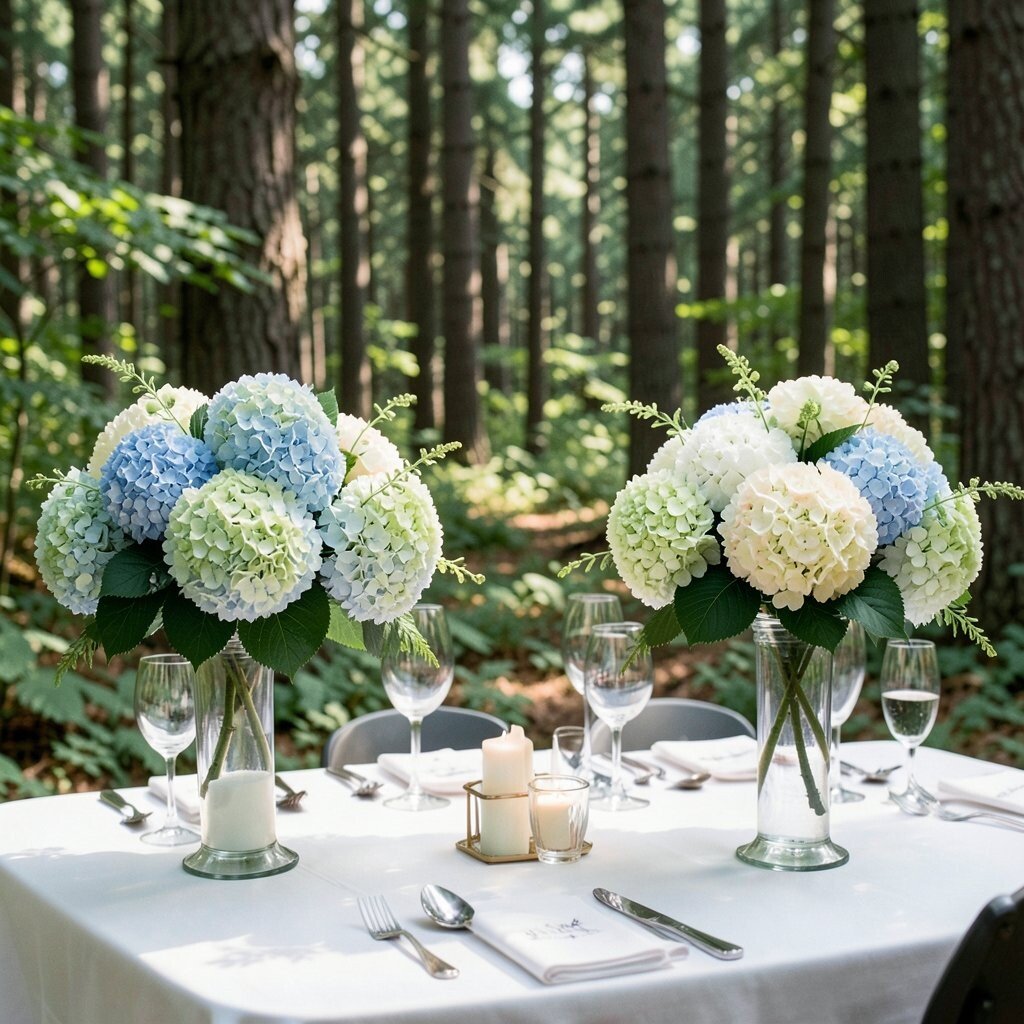
May hydrangeas feel like clouds, and they look especially dreamy in forest venues. Use creamy white or soft blue, then add airy filler like sweet peas or small ranunculus blooms.
This month’s big, rounded shapes help you get a full centerpiece with less fuss. For cost considerations, pair hydrangeas with greenery and use fewer expensive blooms by focusing on texture and volume.
Personalize by choosing a ribbon color that matches your bridesmaid dresses or napkins. You can also add subtle leaf sprigs around candle holders for a cohesive look that feels intentional.
18. June Garden Peony Alternatives and Lush Green Garlands
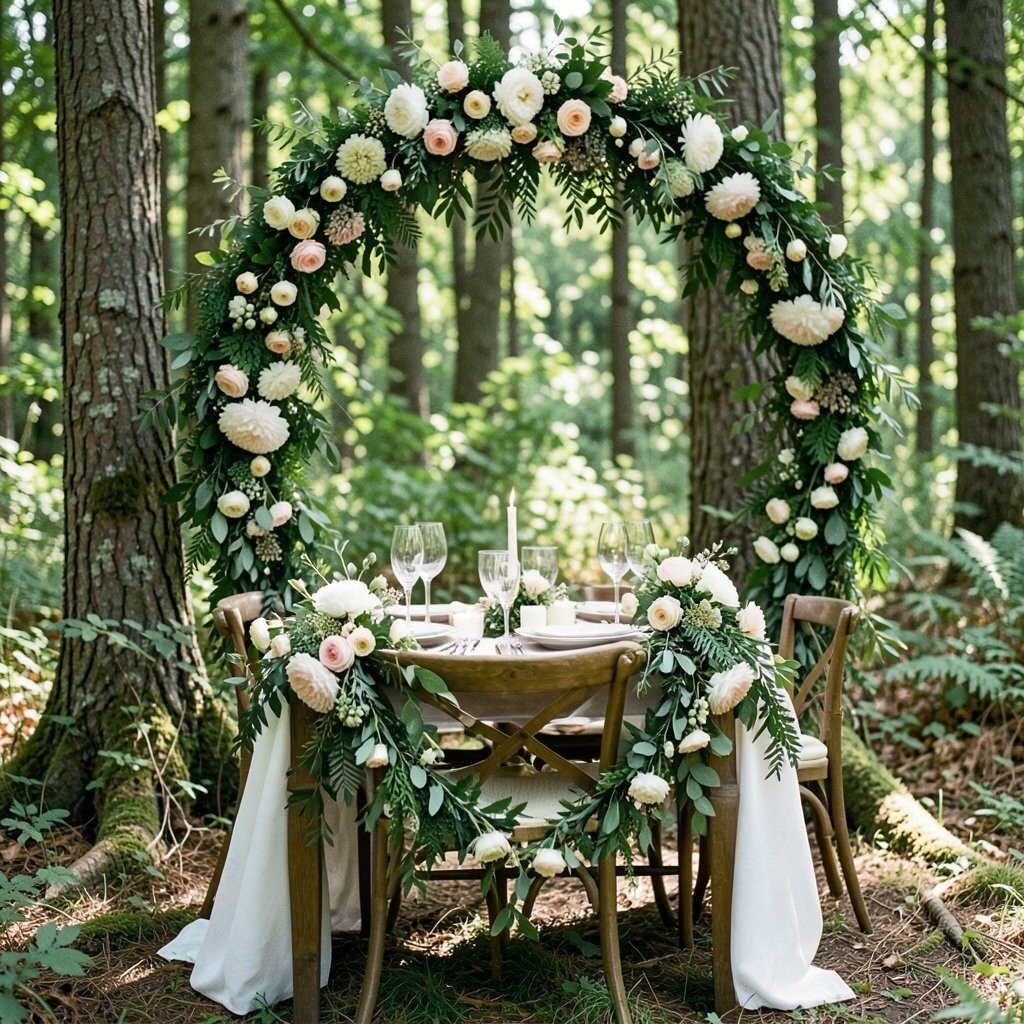
If peonies are scarce or pricey in June, you can still get that lush, romantic look with garden roses, ranunculus, or peony-like blooms. Build bouquets around a dense green base and then place a handful of statement flowers on top.
Green garlands look wonderful along benches, stair rails, or the back of the sweetheart table. They benefit from strong structure, so they hold up during busy wedding days.
For practical tips, keep garlands secured with clear ties or hidden wire and plan placement so guests won’t brush through them while walking. That small planning step saves you stress on ceremony day.
To keep it unique, add a few unexpected leaves or seed pods for a “forest meets garden” vibe.
19. July Cobalt Delphinium and Featherlight Filler
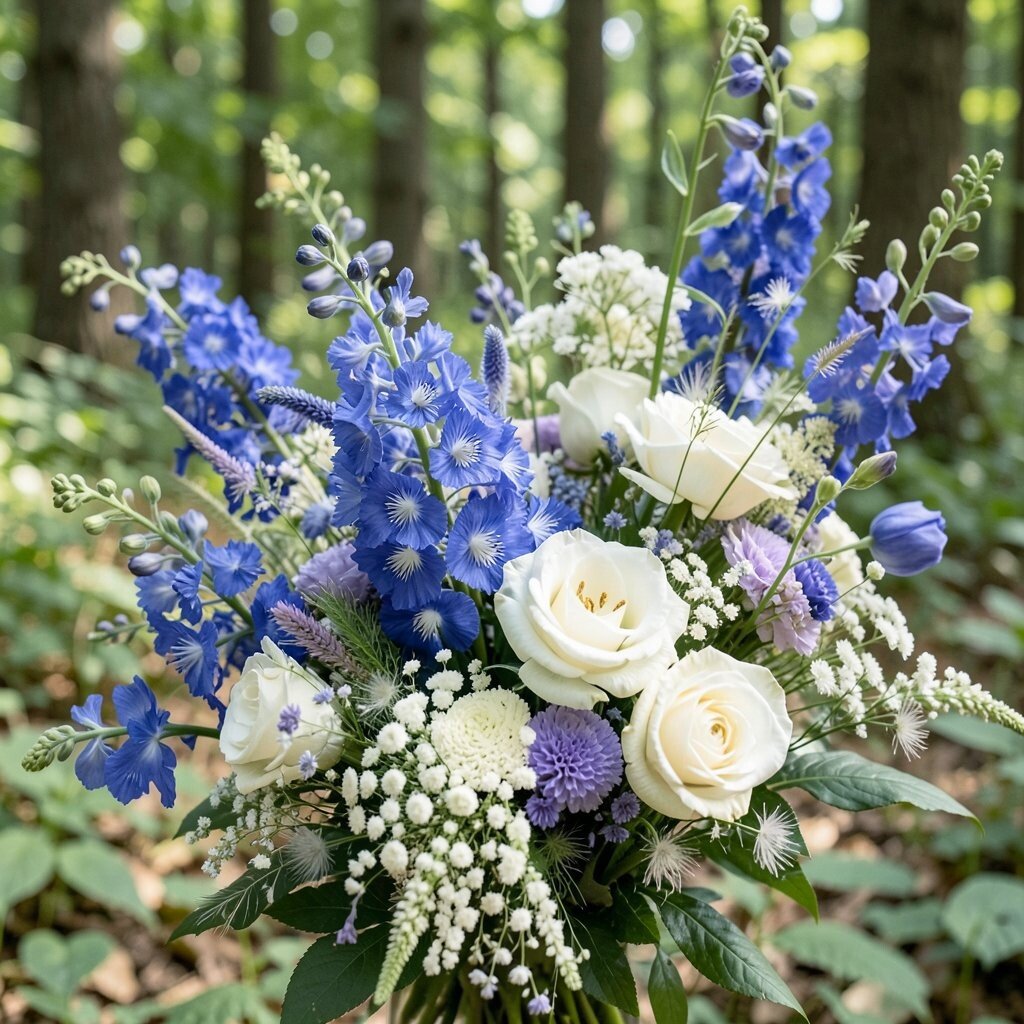
Delphinium adds a bright, vertical look that feels crisp and modern even in rustic woods. Pair deep blues or cobalt tones with creamy filler blooms and delicate foliage that moves like feathers.
This look benefits from height, because taller stems frame the space and make photographs feel dramatic. Use them sparingly in bouquets and lean into them for aisle vases so you get the impact without overspending.
20. August Endless Summer Sunflowers with Soft Leaves
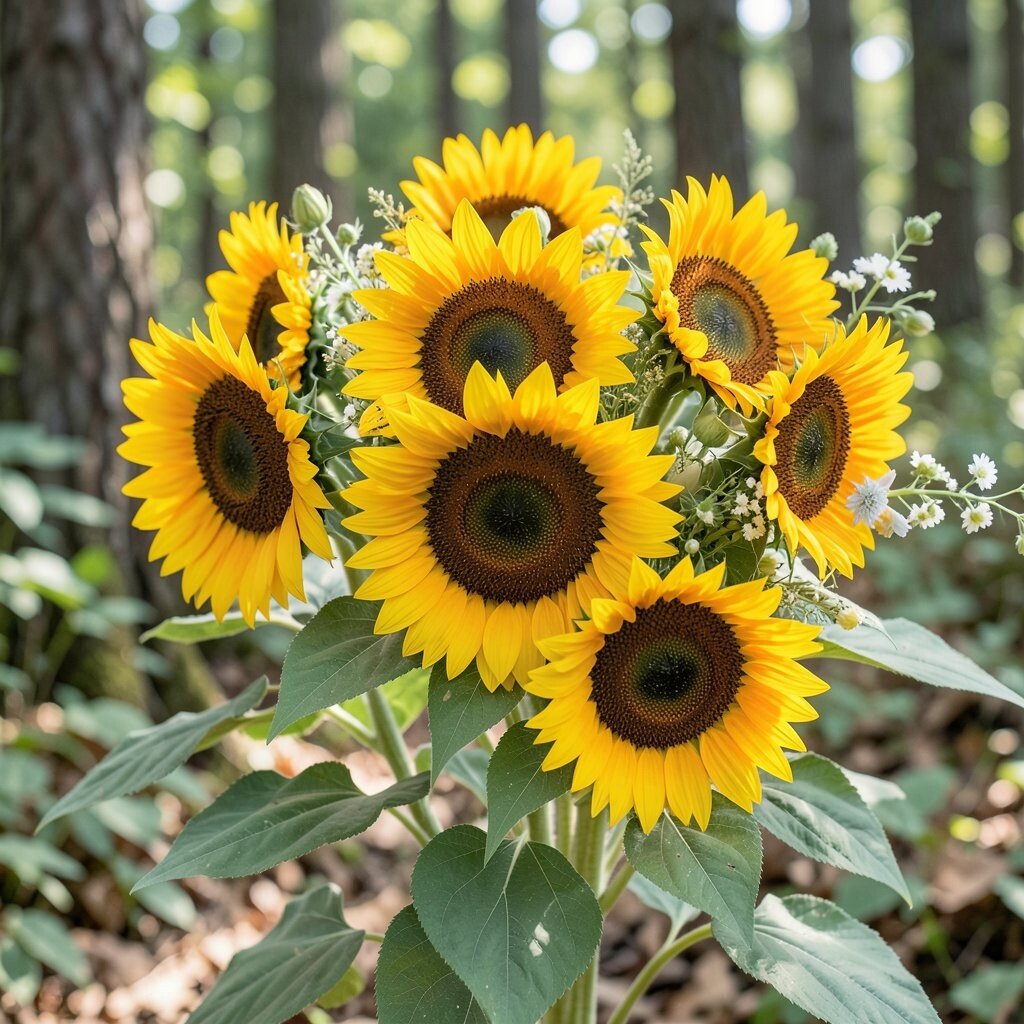
August sunflowers can be cheerful and powerful, especially when you combine them with soft, leafy greens. Choose smaller sunflower heads if you want a more refined look that still feels playful.
Sunflowers bring uniqueness because their bold centers read instantly on camera. For practical styling, make sure the heads are supported in vases or bouquets so they don’t droop from heat or time.
Cost considerations matter here, since sunflowers can vary a lot in price depending on how local they are. Using a mix of sunflower sizes and adding affordable filler blooms helps keep your budget comfortable.
21. September Dahlia and Berry Branch Tablescapes
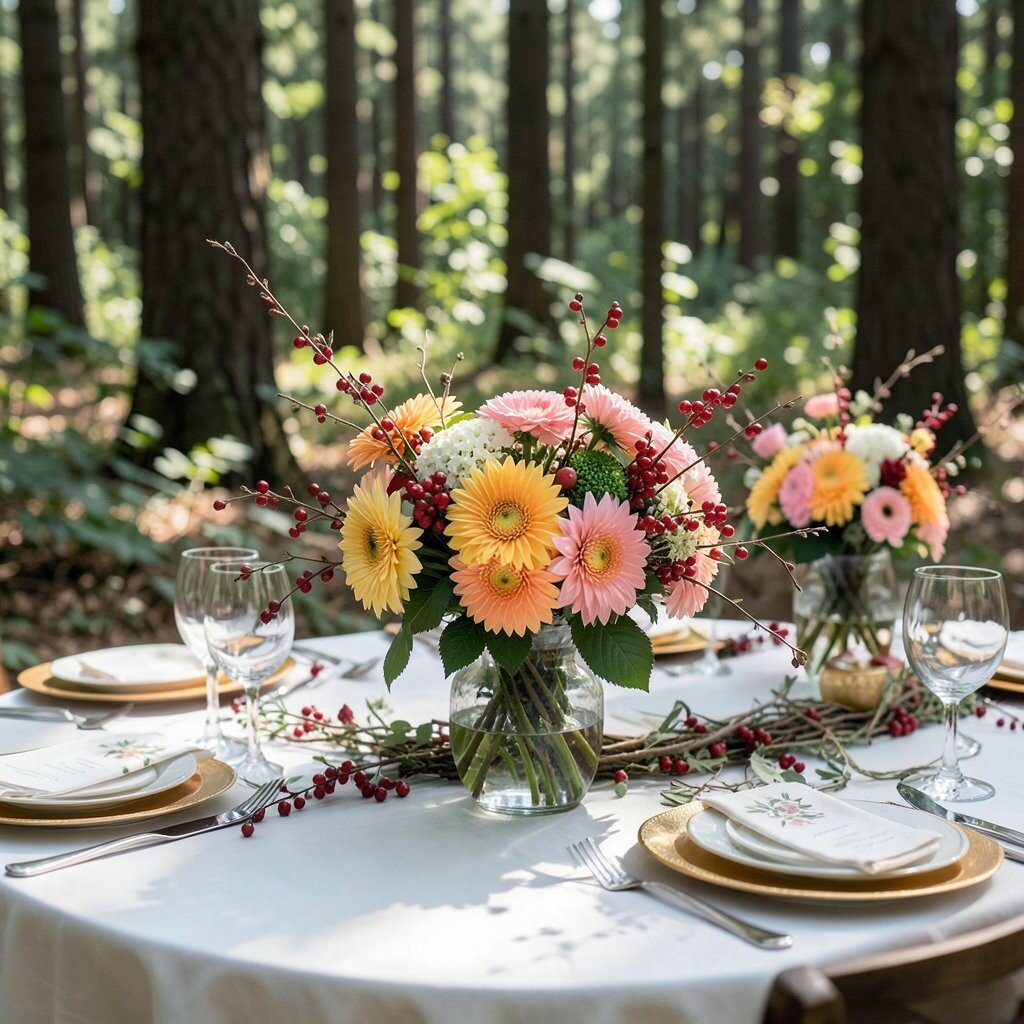
September is the month for rich dahlias, warm berries, and branches that add height to your tables. Build each centerpiece around a main flower cluster, then layer berries and leaves for depth.
Berries and textured branches benefit the overall look because they make arrangements feel seasonal even if some flowers are limited. Keep the stems organized by using pre-cut lengths so each vase or bowl looks consistent.
For personalization, repeat one signature element like a specific berry color or a particular leaf shape across bouquet and boutonniere. That small echo makes your wedding feel designed as a full story.
If you’re mindful of cost, ask for a few statement stems per table rather than full floral blankets. Your guests will still feel surrounded by beauty, and you’ll save money for things that matter more to you.
22. October Candlelight Florals with Deep Orange Accents
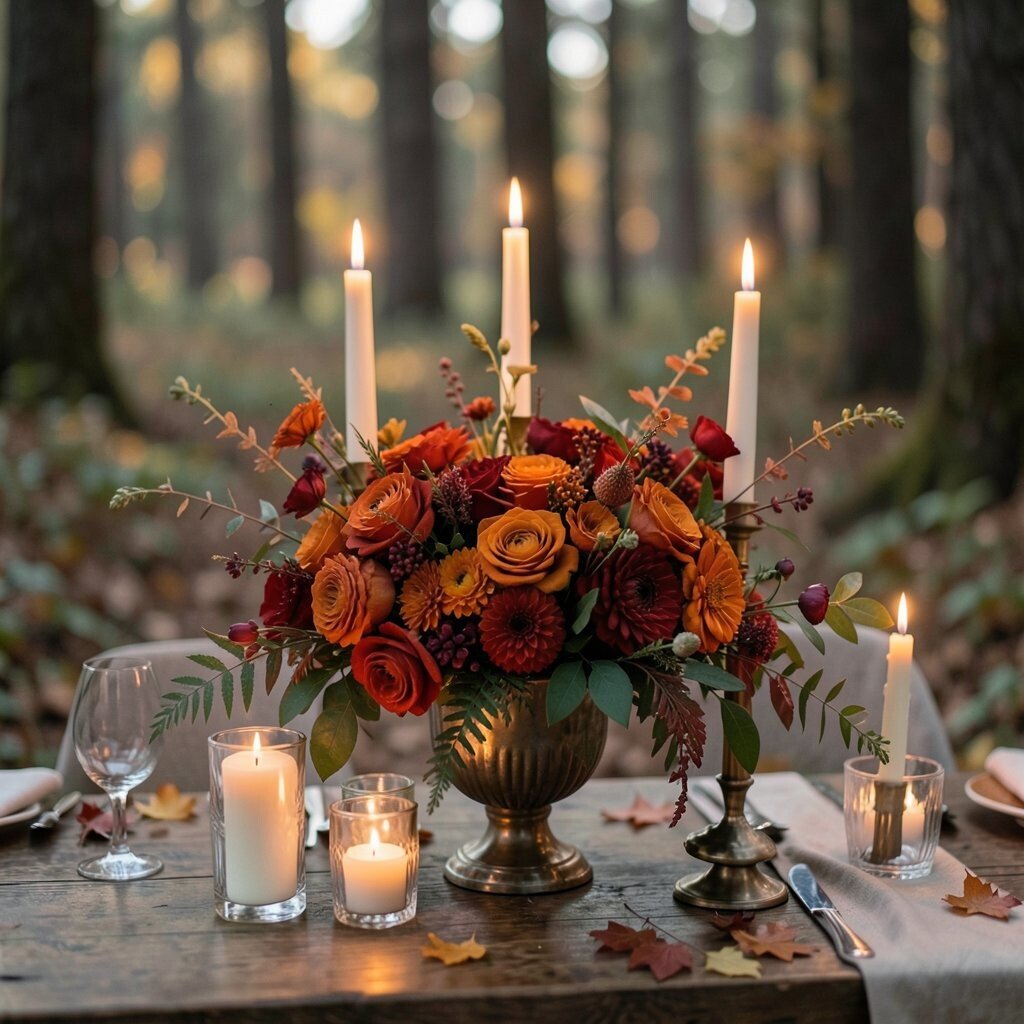
October florals look magical beside candles, and deep orange blooms make that magic feel warm. Pair marigolds, cosmos, or seasonal orange roses with dark leaves and soft cream filler for balance.
This look benefits from using warm-toned foliage and adding greenery that frames the candles instead of covering them. Place a few smaller clusters near the center instead of one massive arrangement, so the tables feel lively from every angle.